Now live across the Southern Plains — Amarillo · OKC · Fort Worth, and growing lane by lane


Load Board
How a Livestock Load Board Helps Haulers Book Better Loads
5 minutes read
Livestock Way
Better loads are not just the ones that pay the most on paper. For cattle and horse haulers, a livestock load board is useful because it brings the load details that matter into one place: rate, lane, animal type, equipment fit, timing and shipper contact. When those details are visible early, you can make faster decisions, avoid poor matches and protect your week from low-margin surprises.
For owner-operators and small fleets, the goal is simple: keep the trailer moving with loads that fit the rig, the route and the way livestock actually needs to be handled. A general freight mindset does not always work when the cargo is alive. Better booking starts with better information.
What a livestock load board changes for haulers
A livestock load board changes the booking process by narrowing the market to loads that are actually relevant to livestock transport. Instead of sorting through dry van, flatbed, reefer and miscellaneous freight postings, haulers can focus on cattle and horse loads where trailer type, animal handling and schedule pressure are already part of the conversation.
That saves time, but it also improves judgment. A load that looks decent by the mile can turn into a weak booking if it requires too much deadhead, the wrong trailer setup, a tight loading window or extra compliance work that was not clear upfront.
If you are comparing livestock-specific boards with broad freight platforms, this breakdown of livestock load boards versus freight boards for cattle hauling explains why the differences matter in real hauling decisions.
Better loads start with visible rates
Rate visibility is one of the biggest advantages of using a dedicated board. When a load shows the money upfront, you can compare it against fuel, deadhead, time, tolls, washout needs and wear on your trailer before you call.
A good livestock load board does not make every load profitable by itself, but it gives you enough information to decide whether the call is worth your time. That matters when you are trying to book around sale barns, ranch pickups, weekend events, vet schedules or return freight.
For example, a high-paying load may not be better than a moderate-paying one if it leaves you empty in a weak market. The better load may be the one that fits your next lane, lines up with your available hours and gets you closer to a shipper you want to work with again.
Look beyond rate per loaded mile
Loaded-mile rate is only one part of the decision. Livestock hauling has costs that do not always show up in a quick rate comparison. Time at pickup, animal count, species, weather, road conditions and the chance of delay can all change the real value of a load.
A practical rate check should include total miles, not just loaded miles. It should also account for whether the load helps you reposition, whether you can reload nearby and whether the shipper has a record of being organized at pickup.
Rig-fit matching keeps you from chasing bad loads
Not every trailer belongs on every livestock load. A possum-belly, ground-load stock trailer, straight deck or multi-compartment setup can each be the right answer depending on the animals, distance and loading facilities.
That is where a livestock load board earns its keep for haulers who do not want to waste calls on freight they cannot safely or efficiently handle. A load that fits your rig from the start is easier to price, easier to plan and less likely to create problems at the chute.
Equipment fit is also about trust. Shippers want to know the hauler has the right setup for the animals being moved. Haulers want to know the load is not going to require improvised solutions that create risk. If you are deciding which loads best match your trailer, Livestock Way has a practical guide to choosing loads for possum-belly, decker and stock trailers.
Direct shipper contact reduces confusion
Brokered communication can work in some freight markets, but livestock hauling often benefits from direct conversation. The shipper usually knows the animals, the facility, the loading setup and the timing constraints better than anyone else.
When haulers can contact shippers directly, they can clarify details before committing. That may include head count, weight range, chute access, pen conditions, whether help is available at loading, whether papers are ready and what happens if weather slows the trip.
Direct contact also helps both sides judge fit. A shipper can hear whether the hauler understands livestock handling, and the hauler can decide whether the load sounds organized enough to book. That reduces surprises on the day of pickup.
Questions worth asking before you say yes
The best calls are short, specific and focused on the parts of the load that affect safety and profit. Ask about the animals, the facilities, the paperwork and the timing. If anything sounds vague, slow down before you commit.
Good questions include:
What species, class and approximate weight are being hauled?
What trailer type or setup is expected?
Are pickup and delivery times firm or flexible?
Are health papers, Coggins tests or brand documents ready if needed?
What loading and unloading facilities are available?
Is there a preferred route or any weather concern?
Better booking means better weekly planning
One strong load is good. A week that fits together is better. The real value of a load board is not only finding freight today, but helping you see enough options to build a sensible route.
A hauler running Amarillo, Oklahoma City, Fort Worth and nearby markets may be thinking about where the truck ends up tomorrow, not just where it starts today. If one load moves you into a better reload area, it may be worth more than another load with a slightly higher posted rate.
A livestock load board helps you compare options in context. You can weigh local work against longer hauls, decide whether to wait for a better match and avoid taking a load that strands you far from your preferred lanes.
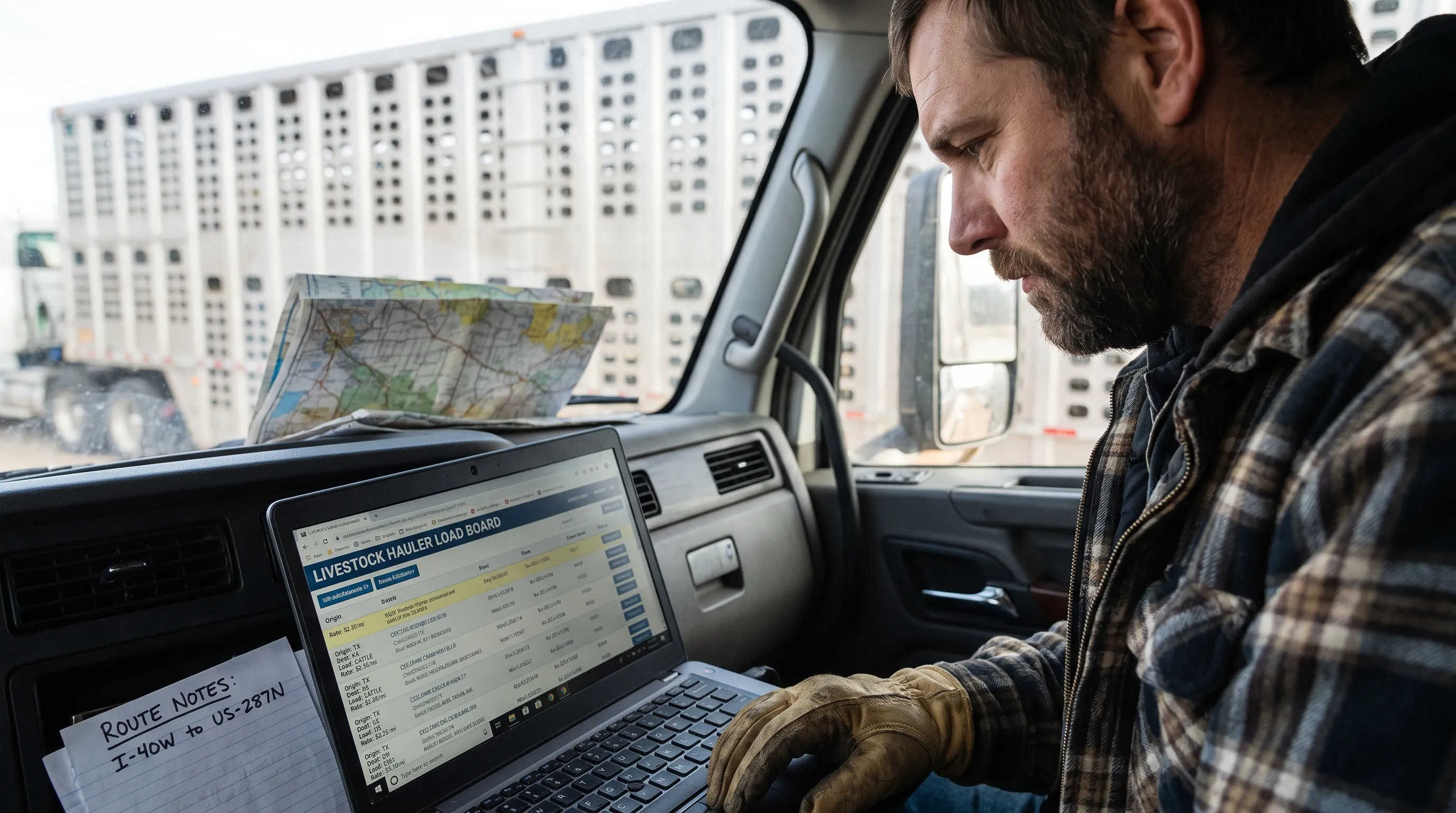
How to use a livestock load board without wasting time
A board is only as useful as the way you use it. The best habit is to search with a plan before you start calling. Know your available trailer, your preferred radius, your minimum rate and where you want to end up after delivery.
Start by checking loads that match your equipment and lane. Then compare total trip economics, including deadhead. After that, call on the loads that still make sense. This order keeps you from getting pulled into long conversations about freight that was never a good fit.
Haulers who book better loads tend to be disciplined about what they pass on. Saying no to the wrong load is part of protecting your week. If the rate is unclear, the timing is unrealistic or the equipment fit is questionable, the better move may be to keep looking.
Build a simple load scorecard
A scorecard does not need to be complicated. It just needs to help you compare loads consistently. Use the same factors each time so you do not overvalue a big number and miss the hidden costs.
Factor to check | Why it matters for livestock haulers |
|---|---|
Posted rate | Shows whether the load deserves a closer look before a call |
Total miles | Reveals the real trip cost, including deadhead and repositioning |
Trailer fit | Helps avoid unsafe or inefficient load matches |
Pickup and delivery timing | Affects hours, animal welfare and reload options |
Animal type and condition | Changes handling, risk and trip planning |
Paperwork needs | Prevents delays at pickup, inspection points or delivery |
Reload potential | Helps determine whether the lane supports your next move |
Better loads protect animals as well as margins
Livestock hauling is not only a freight transaction. The animals need to arrive in good condition, and the hauler’s reputation depends on how the trip is handled. The right load gives you enough time, the right setup and enough information to do the job properly.
A livestock load board can help by making fit and communication part of the booking process instead of afterthoughts. When the hauler knows what is being moved and what conditions to expect, planning becomes more accurate.
For cattle haulers, shrink is one of the clearest examples of why planning matters. Distance, heat, handling stress, feed and water timing can all affect outcomes. Livestock Way covers this in more depth in its guide to managing shrink on long cattle hauls.
Good load selection supports animal welfare by reducing rushed decisions. If the route, facilities or schedule look wrong, it is better to know before the trailer is already pointed at the pickup.
Where Livestock Way fits into better load booking
Livestock Way is built for cattle and horse haulers across the Southern Plains, with loads shown in a way that helps haulers make practical decisions. The platform focuses on livestock-only freight, upfront rates, rig-fit matching and direct shipper contact without a broker in the middle.
For haulers, that means less time sorting irrelevant freight and more time evaluating loads that fit the work they actually do. Free load browsing also makes it easier to check the market before committing to a lane, and free posting gives shippers a simple way to put livestock moves in front of the right haulers.
The platform also includes hauling tools such as shrink and rate calculators, plus a directory for the livestock transport market. Those tools support the same goal as the board itself: helping both sides make clearer, faster and more informed decisions.
A livestock load board will not replace judgment, experience or careful animal handling. It should make those things easier to apply by giving haulers better information before the load is booked.
Signs a load is worth a closer look
The best loads usually share a few traits. The rate is visible, the route makes sense, the shipper can answer basic questions and the trailer requirements match your equipment. None of that guarantees a perfect trip, but it lowers the chance of preventable trouble.
A load is usually worth a closer look when it:
Fits your trailer without forcing a workaround
Pays enough to cover total miles and time
Moves you toward a stronger reload area
Has clear pickup and delivery expectations
Comes from a shipper who communicates directly and clearly
A livestock load board makes these signals easier to spot because the search starts inside the livestock market. Instead of asking whether a random freight posting might work, you can focus on whether a real cattle or horse load is the right one for your rig and route.
Frequently Asked Questions
Is a livestock load board only for large livestock carriers? No. Owner-operators, small fleets and larger carriers can all use a board to find better-fitting cattle and horse loads. The value comes from matching available equipment and lanes with shippers who need livestock moved.
What makes a livestock load better than a regular freight load? A better livestock load fits the trailer, pays enough for total trip cost, has clear animal and paperwork details and gives the hauler a realistic schedule. The live-animal factor makes communication and equipment fit especially important.
Can a load board help reduce deadhead miles? Yes, when it gives haulers enough visibility to compare nearby loads, destination markets and reload potential. It still requires planning, but seeing more relevant options can help reduce empty miles.
Do upfront rates matter that much? Upfront rates save time and make it easier to compare loads before calling. They also help haulers avoid spending time on freight that will not cover the true cost of the trip.
Should new haulers use a livestock load board? Yes, as long as they also understand equipment, handling, paperwork and safety requirements. A board can help new haulers see available work, but it does not replace preparation or livestock experience.
Book better livestock loads with clearer information
If you haul cattle or horses across the Southern Plains, better bookings start with better visibility. Use Livestock Way to browse livestock loads with upfront rates, find work that fits your rig and connect directly with shippers without a broker in the middle.