Now live across the Southern Plains — Amarillo · OKC · Fort Worth, and growing lane by lane


Load Board
How Cattle Haulers Can Cut Empty Miles Between Loads
10 minutes read
Livestock Way
Empty miles are one of the quietest profit leaks in livestock hauling. For cattle haulers, every mile driven without animals on the trailer still burns fuel, time, tires, hours and attention, but it does not bring in revenue unless the rate on the paid leg covered the round trip. Cutting those miles is less about chasing any load that appears and more about building a repeatable system for routing, timing, trailer fit and shipper relationships.
Why cattle haulers lose money on empty miles
Deadhead is not always avoidable. You may have to wash out, reposition to a sale barn, head home for a scheduled repair or run empty because the only available backhaul does not fit your trailer, your permits or your animal-handling standards. The problem starts when empty miles are treated like bad luck instead of a cost that belongs in the rate.
When cattle haulers treat empty miles as part of the job cost, they make better decisions before accepting a load. A $4.25 loaded-mile rate can look strong until you add a 180-mile bounce to pickup and a 240-mile empty run home. At that point, the real rate is not the posted loaded-mile number. It is the revenue divided by every mile the truck must run to complete the trip.
That is why the best operators do not only ask, “What does this load pay?” They ask, “What does this lane set me up for next?” A load that ends near feedyards, sale barns, equine facilities or ranch country usually creates more options than a load that drops in a dead zone with no livestock freight nearby.
Start with all-miles math, not loaded-mile math
Before accepting a cattle load, calculate the trip on all miles. Include the distance from your current location to pickup, the loaded leg, washout or rest stops if required, the likely bounce to the next load and any unavoidable return miles.
The fix for cattle haulers is to quote and compare loads based on revenue per total mile, not revenue per loaded mile. This keeps a “good” rate from hiding a bad reposition and helps you decide whether to ask for more, wait for a better lane or pair the load with another move.
Cost question | Why it matters | Better planning habit |
|---|---|---|
How far am I from pickup? | Long pickup bounces reduce the true rate | Set a maximum deadhead radius by lane |
Where does the load deliver? | Some drop areas have few reloads | Check nearby barns, ranches and horse facilities before booking |
What happens after delivery? | The next move determines profit | Identify two possible reload areas before you roll |
Does the trailer fit the next market? | Wrong trailer limits backhaul options | Match load searches to pot, ground load, stock trailer or deck setup |
Can the schedule work legally and safely? | Late delivery can kill reload options | Build in animal care, rest, fuel and washout time |
This kind of math does not need to be complicated. A notebook, spreadsheet or dispatch app can do it. The main point is to stop treating the empty leg as invisible.
Build lanes around livestock density
Empty miles shrink when your route connects places that naturally create livestock movement. In the Southern Plains, that often means thinking in triangles rather than straight lines. A truck running Amarillo, Oklahoma City and Fort Worth has more chances to stay in livestock country than one chasing a single long haul that ends outside a workable network.
Cattle haulers who know their strongest lanes can say no faster to loads that pull them away from freight. That discipline is hard when the phone is slow, but it protects the week. One weak reposition can erase the margin from a strong load, especially when fuel and maintenance are already high.
Look for repeat patterns in your own history. Which delivery areas usually produce reloads within a reasonable radius? Which pickup points always require a long empty pull? Which shippers load on time and which ones cost you half a day? Your past trips are a lane map if you track them honestly.
If you are still building your customer base, livestock-only load sources can help you avoid sorting through general freight that does not fit the job. Livestock Way focuses on cattle and horse freight, shows upfront rates and lets you browse available loads without paying to look. For more detail on why livestock freight behaves differently from dry van or flatbed freight, see this comparison of livestock load boards and general freight boards.
Match the trailer before you chase the backhaul
A backhaul only helps if it fits the rig and the animals. Taking the wrong load to avoid deadhead can create safety problems, delays, extra handling risk or a poor reputation with shippers. Trailer fit matters more in livestock than in many freight categories because cattle, horses and smaller stock all have different space, ventilation and handling needs.
Cattle haulers can cut empty miles by searching for reloads that match their equipment first, then filtering by rate and timing. A possum-belly trailer, ground-load stock trailer, straight deck or multi-compartment setup will not all compete for the same freight. Knowing where your trailer is most useful helps you position around the right shippers instead of hoping any nearby load will work.
If you are deciding which loads suit your equipment, this guide to possum-belly, decker and stock trailer options can help frame the tradeoffs. The better your equipment matches the market around your destination, the fewer miles you are likely to run empty.
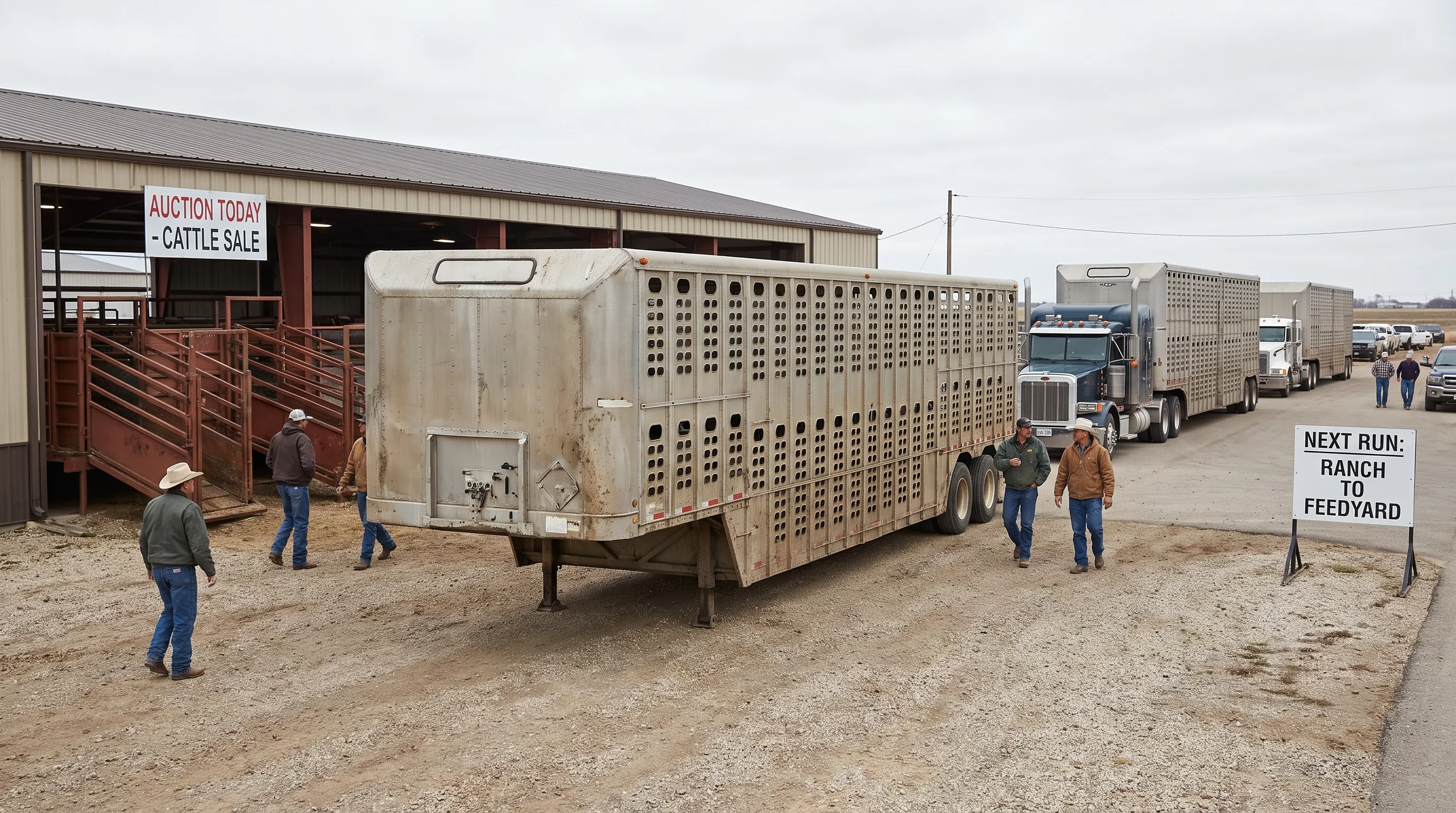
Use timing as a routing tool
The cheapest empty mile is the one you avoid by waiting a little longer in the right place. That does not mean sitting all day for free, but it does mean knowing when a short delay is cheaper than a long bounce.
For cattle haulers, timing affects reload options as much as geography. Sale days, ranch schedules, receiving hours, vet paperwork, weather and driver hours can all decide whether the next load is possible. If you deliver late in the evening near a market that loads early the next morning, staying close may beat driving home empty, especially if the next load puts you back toward your preferred lane.
The key is to make that decision before delivery, not after you are already tired and parked. Call ahead. Check load boards before unloading. Confirm whether a shipper can load your trailer type, whether paperwork is ready and whether the destination puts you near the next likely move.
Build direct shipper relationships on repeat lanes
Direct relationships are one of the strongest defenses against deadhead. A shipper who knows your trailer, your operating area and your standards may call you before a load ever gets posted publicly. That does not eliminate empty miles, but it gives you earlier notice and more room to plan.
Cattle haulers should treat every good load as a chance to create the next one. After delivery, ask whether the shipper or receiver has future movement in the same lane. Let them know where you usually run, what equipment you have and how much notice helps you make the rate work. Keep the conversation practical. Most ranchers and livestock businesses care about reliability, animal handling and clear communication more than a polished sales pitch.
A direct-contact model also reduces the confusion that can happen when too many people sit between the person with the animals and the person hauling them. Livestock Way is built around that idea, with upfront rates, direct shipper contact and no broker in the middle.
Plan for washouts, animal care and compliance
Empty-mile planning should never push animal welfare or compliance into the background. Sometimes the right answer is to deadhead to a proper washout, pass on a tight reload or stop earlier than planned because the animals and driver need the safer choice.
Good planning still helps. If a washout location is predictable, include it in the route before you quote the rate. If a reload requires paperwork or special handling, confirm that before you commit. If hours of service rules affect whether you can legally make the next pickup, solve that problem before the cattle are on the trailer.
This matters on longer moves where shrink, stress and timing all connect. For a deeper look at protecting cattle condition over distance, Livestock Way has a practical guide to managing shrink on long cattle hauls. Empty-mile reduction should improve the business without cutting corners on the animals.
Create a weekly empty-mile routine
The operators who improve deadhead usually measure it. At the end of each week, compare loaded miles, empty miles, total revenue and the lanes that created the best follow-up loads. You do not need a complicated system, but you do need consistency.
A simple weekly review can include:
Total loaded miles
Total empty miles
Revenue per total mile
Loads that created a reload opportunity
Loads that stranded the truck
Shippers worth contacting again
Markets to avoid unless the rate covers the bounce
Cattle haulers who review these numbers can spot patterns that are easy to miss day by day. Maybe Friday deliveries to one area always force a deadhead home. Maybe a slightly lower-paying Thursday load sets up a strong Friday reload. Maybe one shipper’s “quick pickup” regularly costs enough time to ruin the next move.
Once you see those patterns, you can set rules. For example, you might only take a certain lane if the rate covers the return, if a reload is already lined up or if the delivery lands you within a specific distance of a known livestock market.
Frequently Asked Questions
What is a good empty-mile percentage for cattle hauling? There is no single number that fits every operation because lanes, trailer type, home base and customer mix vary. A better target is steady improvement in revenue per total mile and fewer unplanned long bounces after delivery.
Should I take a lower-paying load if it reduces deadhead? Sometimes, yes. A lower loaded-mile rate can be better if it keeps the truck in a strong livestock lane and improves the week’s total-mile revenue. Always compare the full trip, not just the posted rate.
How far should I deadhead for a cattle load? Set a radius based on your costs and the quality of the lane. A long deadhead may make sense for a strong direct customer or a load that positions you well, but it should be priced into the trip.
Can load boards really reduce empty miles? A livestock-specific load board can help because the available freight is more likely to match your trailer and market. It works best when paired with your own shipper relationships and all-miles rate math.
Keep the truck closer to paying freight
Cutting empty miles is not about never running empty. It is about knowing when empty miles are worth it, when they should be built into the rate and when a load will strand the truck in the wrong place.
For cattle haulers running the Southern Plains, Livestock Way can make that planning simpler by showing livestock loads with upfront rates, rig-fit details and direct shipper contact. Browse cattle and horse loads, post a load for free or use the hauling tools at Livestock Way to make the next mile easier to justify.