Now live across the Southern Plains — Amarillo · OKC · Fort Worth, and growing lane by lane

Equine Load Board
How to Prepare a Livestock Horse Trailer for Multi-State Trips
10 minutes read
Livestock Way
Preparing a livestock horse trailer for a multi-state trip takes more than checking the lights and filling the truck. You need a sound towing combination, an animal compartment suited to the load and a route that accounts for weather, paperwork and safe stopping places. A problem found in your yard is easier to fix than one discovered with horses or cattle aboard several hours from home.
Work through preparation in this order: confirm the load, inspect the equipment, verify entry requirements and plan how you will manage the animals through delivery.
Confirm the Trailer Fits the Animals
A stock trailer and a purpose-built horse trailer are not automatically interchangeable. Open stock compartments, horse stalls and adjustable dividers support different loading arrangements. Start with the animals’ species, size, estimated weight, temperament and handling experience, not just the number of available spaces.
Horses need adequate clearance and an interior free of projections that could catch a halter or injure a head or leg. Cattle require suitable containment, footing and compartment arrangements. Do not mix horses and cattle in the same compartment simply because the trailer has room.
Account for the complete load: animals, bedding, water, feed and equipment. Check the truck, hitch, trailer and axle ratings rather than relying on the advertised tow rating alone. Use scale weights when necessary to establish actual loading.
If you are comparing equipment layouts, Livestock Way’s guide to choosing loads for different livestock trailer types helps explain why trailer configuration matters before accepting a haul.
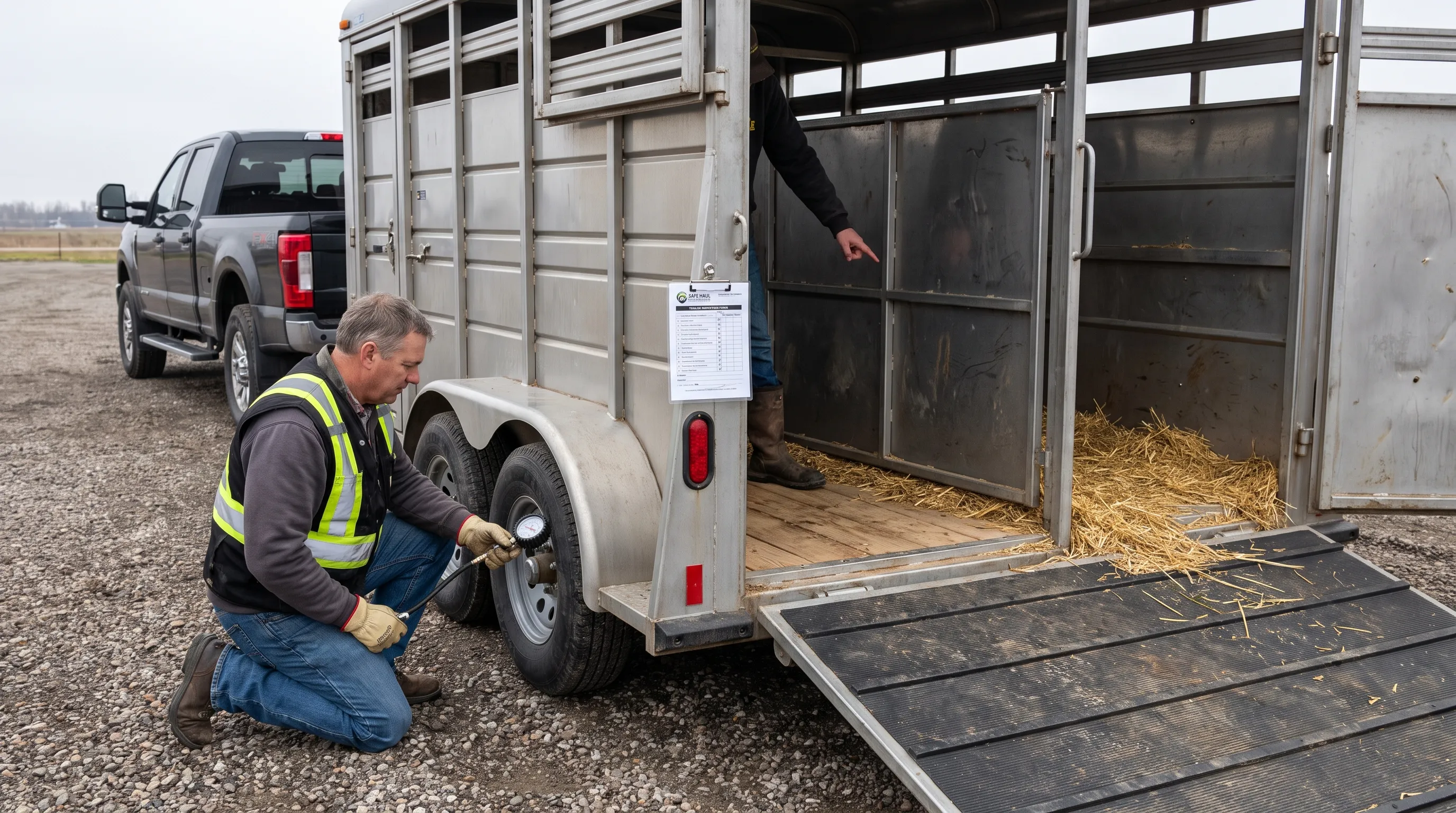
Inspect Your Livestock Horse Trailer From Hitch to Floor
Inspection should follow a consistent walkaround so that a distraction does not leave a component unchecked. For applicable commercial operations, 49 CFR § 392.7 requires the driver to be satisfied that specified equipment, including brakes, tires, lights and coupling devices, is in good working order before driving.
Coupling, brakes and electrical connections
Confirm that the ball, coupler or fifth-wheel components are compatible and properly secured. Inspect mounting hardware and attach safety chains or cables as required for the equipment. Route electrical connections so they cannot drag, pinch or pull tight during turns.
Check the breakaway battery and test the system according to the manufacturer’s instructions. Attach its cable as directed, rather than assuming any convenient connection point will work. Verify running lights, brake lights, turn signals and any required marker lights.
Inspect the service brakes and brake-controller operation. After loading, make a controlled, low-speed brake check in a safe area and adjust the controller according to its instructions. A brake setting that felt right with an empty trailer may not suit the loaded combination.
Tires, wheels and weight distribution
Check tire pressure cold against the appropriate manufacturer guidance. Inspect tread, sidewalls, valve stems and the spare. Look for cracks, bulges, uneven wear or damage that requires replacement, even when tread remains.
Your livestock horse trailer also needs sound wheel bearings, correctly secured wheels and a service history you can trust. Have unfamiliar heat, noise or wheel play evaluated before departure. Follow the manufacturer’s wheel-fastener torque and recheck instructions.
Position the load within the trailer’s intended arrangement. Correct total weight does not guarantee acceptable axle loading or hitch weight. If balance is uncertain, consult the trailer manufacturer and verify the loaded combination on a scale.
Floors, gates and partitions
Lift removable mats and inspect the structure underneath. Wooden floors can hide rot, while metal floors can develop corrosion, cracks or damaged joints. Examine supports and attachment points, not just the surface animals stand on.
Check ramps, hinges, latches, butt bars and dividers. Each should function securely without sharp edges or makeshift repairs. Inspect the loading approach as well: a sound ramp is still unsafe if its footing shifts or its slope is unsuitable.
Do not cover a questionable floor with bedding and call it ready. Structural concerns require assessment and repair before animals are loaded.
Clean the Interior and Set Up Airflow
Remove manure, wet bedding and leftover feed before washing. When disinfection is warranted, select a product appropriate for the surfaces and animal-health concern, then follow its dilution, contact-time and rinsing instructions. Keep animals out during cleaning and allow the compartment to dry before rebedding.
Prepare your livestock horse trailer with secure footing and bedding appropriate to its floor, drainage and passengers. Avoid excessive dust and do not let bedding conceal damage or interfere with doors and latches. Keep handling equipment clean between loads, especially when collecting animals from different premises.
Confirm that vents and windows operate correctly and that protective bars or screens are secure. Airflow needs depend on the weather, trailer design and loading density. Do not close the compartment tightly simply because highway air feels cool to the driver.
A parked trailer can lose the ventilation it had in motion. Plan stops with that limitation in mind, particularly during hot weather. In cold conditions, protect animals from severe direct drafts without eliminating fresh air.
Verify Paperwork for the Actual Route
Interstate animal-entry requirements depend on species, origin, destination, purpose of movement and current disease restrictions. A document accepted on a previous trip may not cover a different destination or travel date.
For horses, ask your veterinarian about the destination’s requirements for a negative equine infectious anemia test, commonly called a Coggins test, and a certificate of veterinary inspection. For cattle, confirm applicable identification, testing, permit and certificate requirements. Requirements can also change for sales, exhibitions or breeding movements.
Keep the paperwork for your livestock horse trailer load organized by animal or group, with identification that matches the animals aboard. Carry records in an accepted format and retain an accessible backup. Do not assume a phone photograph substitutes for a required original or approved electronic document.
Use Livestock Way’s state-by-state Coggins and health certificate guide as a starting point, then confirm current requirements with the destination state animal-health office and your veterinarian. Ask about any planned layovers or unloading in other states, not just the final address.
Plan Stops Before Departure
Build the route around the loaded rig, not the fastest passenger-car directions. Check bridge restrictions, clearances, road closures, steep grades and the receiving site’s access. Ask whether the entrance allows your combination to turn and whether its driveway remains usable after rain.
Confirm fuel locations with enough space to enter and exit without tight backing. Identify places where you can safely inspect animals, tires and the hitch. For longer trips, arrange suitable layover facilities in advance rather than hoping an unfamiliar sale barn or fairground will accept you.
A livestock horse trailer stop plan should distinguish between a roadside equipment check and a genuine animal-rest location. A crowded truck stop is not automatically a safe place to unload horses or cattle. Any unloading requires secure containment, suitable footing and agreement from the property operator.
Review weather along the whole route and set a threshold for delaying travel. Verify applicable hours-of-service and animal-transport rules for your operation; do not assume a livestock exemption applies to every part of the journey.
Keep the receiving contact, backup contact, veterinarian details and roadside-service information available offline. Share the route and expected arrival window with someone who can help if plans change.
Load Calmly and Secure Equipment
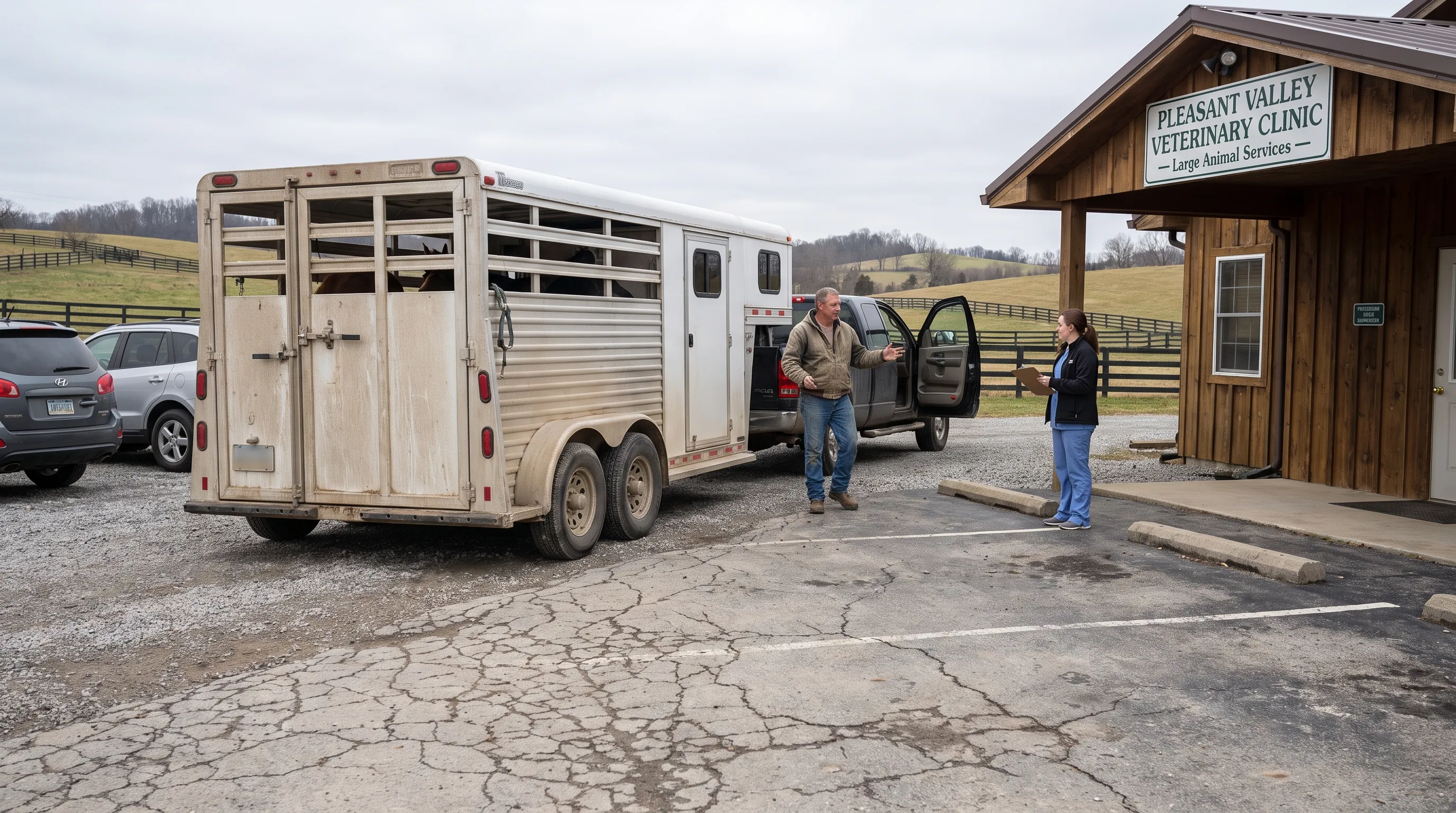
Assess fitness to travel before loading. An animal that is lame, weak, unusually distressed or showing signs of illness needs veterinary guidance, not a rushed departure. Agree with the owner on any special handling requirements and who can authorize veterinary care during the trip.
Make the loading area quiet and remove avoidable distractions. Use experienced handlers, keep people clear of pinch points and maintain an escape route. Avoid placing anyone directly behind an animal where a kick or sudden backward movement could trap them.
Before closing your livestock horse trailer, confirm that each compartment is arranged for its occupants and that every gate, divider and restraint is correctly secured. For horses that will be tied, use intended tie points and a safe arrangement appropriate to the trailer and animal. Ask an experienced handler or veterinarian when you are unsure.
Secure buckets, feed, tack and tools so they cannot fall into the animal space. Do not leave loose equipment where it can slide beneath feet. Carry suitable water and feed for the trip, plus a reserve for delays, with the watering and feeding plan agreed before departure.
Manage the Load While Traveling
Drive to limit abrupt braking, hard cornering and unnecessary acceleration. Animals must constantly adjust their balance, so a trip that feels only mildly rough in the cab can be harder on passengers standing in the trailer.
At safe stops, check the animals’ condition, airflow, gates and accessible equipment. Watch for unusual breathing, sweating, distress or difficulty standing. If you suspect illness, heat stress or an injury, contact a veterinarian and arrange a safe response rather than pushing on to the destination.
Recheck your livestock horse trailer after the first safe opportunity following departure and whenever road conditions or animal behavior suggest a problem. Look for shifting equipment, damaged connections, loose latches or tire trouble. If something smells hot or a wheel appears abnormal, stop safely and investigate without touching potentially hot components.
Watering and rest needs vary with species, weather, trip length and animal condition. Use the plan developed with the owner and veterinarian rather than treating one schedule as suitable for every load. Never give sedatives simply to make hauling easier without veterinary direction.
If a breakdown occurs, secure the vehicle and seek assistance. Do not turn an uncontrolled roadside area into an unloading site unless immediate danger requires emergency action coordinated with responders.
Prepare the Receiving Site for Unloading
Call ahead with an updated arrival estimate. Confirm that the receiver has the right people, a clear approach and a secure pen or stall ready. Discuss who will open gates, handle animals and check identification, especially when unloading after dark.
Keep your livestock horse trailer closed until the receiving area is ready. Check footing, lighting and escape hazards before opening the rear gate. Allow handlers to work without spectators crowding the exit, and avoid rushing an unfamiliar animal into a noisy or obstructed space.
If a destination also hosts supported learning or recreation, coordinate arrivals with program staff. Programs such as Ons Plekske’s work, learning and recreation activities serve young people with mild intellectual disabilities and/or autism. Ask the host about individual communication and support needs rather than making assumptions, and keep participant activities separate from animal unloading.
After delivery, document any concerns and remove wet bedding or manure when practical. Arrange another inspection if the trip revealed damage, unusual tire wear or brake problems.
Use a Final Departure Check
Finish with a short release check once the animals are aboard. This supplements the detailed inspection; it does not replace it.
Equipment: Coupling secured, connections routed correctly, brakes checked and lights working.
Load: Animals suitable to travel, compartments secured and loose equipment contained.
Weight: Loaded combination within applicable vehicle, trailer, axle and hitch limits.
Documents: Required health records, identification and movement permissions accessible.
Route: Fuel, weather, safe inspection stops and any layover arrangements confirmed.
Contacts: Receiver, owner, veterinarian and breakdown assistance reachable.
If any item remains unresolved, address it before pulling out. Departure pressure is not a reason to accept an uncertain latch, questionable tire or missing entry document.
Frequently Asked Questions
Can a stock trailer be used to haul horses across state lines? It can be suitable if its dimensions, flooring, containment and interior design safely accommodate the horses. Interstate paperwork still applies. Have an experienced horse handler assess an unfamiliar setup rather than judging suitability by available space alone.
How often should I stop to check the animals? Establish a plan based on trip length, weather, species and animal condition, with veterinary input when needed. Check earlier if you notice unusual behavior or equipment problems. Avoid roadside unloading where secure facilities are unavailable.
Does a livestock horse trailer need different preparation for cattle and horses? Yes. Compartment layout, restraint arrangements, headroom, handling methods and paperwork can differ. Prepare for the specific animals aboard rather than assuming one loading setup works for both species.
Should I carry printed health documents? Carry whatever format the relevant authorities accept and keep an accessible backup. Confirm requirements before departure; an image stored on a phone may not satisfy the receiving state or facility.
Find a Load That Fits Your Prepared Rig
Preparation works best when the load matches the equipment from the outset. On Livestock Way, cattle and horse haulers can browse loads for free, see upfront rates and contact shippers directly without a broker middleman. Use that conversation to confirm animal size, loading arrangements, route and receiving conditions before committing your rig.