Now live across the Southern Plains — Amarillo · OKC · Fort Worth, and growing lane by lane


Load Board
Post a Load With Details Haulers Can Act On
10 minutes read
Livestock Way
When you post a load, the goal is not simply to announce that cattle or horses need a ride. It is to give a qualified hauler enough information to judge the route, equipment fit, schedule and pay before picking up the phone.
A listing that says “cattle, Amarillo to OKC, call for details” leaves nearly every decision unresolved. A useful listing answers the basic questions upfront and reserves the conversation for confirming the job. Here is how to write one that haulers can act on without guessing.
Start with the hauler’s decision
A hauler reviewing your listing needs to determine whether the job fits the truck, trailer and available schedule. Put the decision-making facts first, rather than burying them below a description of your ranch or operation.
Decision | Information the listing should provide |
|---|---|
Does the route work? | Origin, destination and relevant access restrictions |
Will the animals fit safely? | Species, head count, estimated weights and separation needs |
Can the schedule work? | Pickup window, receiving hours and appointment requirements |
Is the job financially workable? | Offered rate, payment basis and additional-charge terms |
Who can confirm it? | A reachable booking contact and clear next step |
Specific information is more useful than promotional language. “Easy load” means little without details about the animals, facilities and timing.
Before you post a load, gather the facts
Identify both locations and their access conditions
Include the pickup and delivery cities and states. “Fort Worth area” may describe a broad service area, but it does not tell a driver where the trip actually ends. Add the community or general location when it materially changes the route.
Confirm the exact addresses before booking. If you keep a private ranch address out of the public listing, say that the verified address and entrance instructions will be shared before acceptance. A map pin alone may point to the house rather than the livestock entrance.
Describe access conditions that could affect the equipment choice: a narrow gate, tight turn, low clearance, unpaved approach or limited turnaround space. Identify the loading facility, such as a chute, dock or ground-level arrangement, and confirm that it works with the requested trailer.
The destination deserves the same attention. Receiving hours, unloading arrangements and an onsite contact can matter as much as pickup access. If either site has a restriction you have not checked, mark it as unconfirmed rather than letting the driver discover it upon arrival.
Describe the animals and required equipment
Before you post a load, distinguish confirmed counts from estimates. Give the species, head count, animal class and estimated average weight, then explain how that weight was determined. Recent scale weights and a visual estimate are not equivalent.
For cattle, relevant information may include whether they are calves, feeders, cows or bulls, along with any sorting or separation requirements. For horses, include approximate size, stallion or mare status where relevant, loading behavior and whether they have traveled together before. Disclose known handling concerns directly.
Request the actual trailer type you need. If you are unsure, describe the animals and facilities rather than selecting equipment by guesswork. Livestock Way’s guide to choosing among possum-belly, decker and stock trailers provides context for that conversation.
Specific categories help prevent mismatches. In wheel shopping, for example, Velgensupermarkt’s wheel and rim selection distinguishes alloy wheels, steel wheels and spare-wheel kits rather than treating everything as interchangeable. Livestock trailer descriptions also need specificity, although a trailer label alone does not establish capacity.
The hauler must confirm safe, legal loading capacity and compartment arrangements. Do not assume that a particular head count fits every trailer of the same general type.
Make the rate understandable without a phone call
When you post a load, show the offered rate and explain what it covers. A dollar amount without a payment basis still leaves room for misunderstanding.
Specify whether the offer is a flat trip rate, a loaded-mile rate, a per-head rate or another arrangement. For mileage-based pay, identify how payable miles will be agreed upon. For per-head pay, explain whether payment uses the booked count or the number actually transported.
Clarify fuel treatment and any agreed additional charges. Loading delays, extra stops, washout requirements or a changed destination should not become surprise negotiations after the truck arrives. If detention applies, state the free-time allowance, when the clock starts and the agreed hourly charge.
Payment terms belong in the listing or written confirmation as well. Identify who pays, when payment is due and which documents are needed, such as an invoice or signed delivery receipt. “Paid promptly” is less useful than a defined deadline.
There is no need to write a full contract into the public description. Give enough detail to screen the opportunity, then confirm the complete terms in writing before dispatch. If a charge remains negotiable, label it that way instead of presenting it as settled.
Separate firm appointments from flexible windows
A usable schedule distinguishes what is fixed from what can move. When you post a load, write the calendar date, local time window and time zone instead of “tomorrow morning” or “ASAP.” Relative dates become confusing when a listing stays visible longer than expected.
If pickup is flexible, describe the flexibility precisely: “Tuesday or Wednesday, loading available from 7 a.m. to noon Central.” If delivery requires an appointment, say who arranges it and whether the slot is already confirmed.
Also explain what must happen before loading. The animals may need to be gathered, counted or sorted. Someone may need to unlock a gate or operate the chute. Identify whether those tasks will be complete before the truck arrives and whether loading help is available.
Include any required movement paperwork and state who is responsible for preparing it. Requirements depend on the animals, origin and destination, so verify them with the appropriate veterinarian or animal-health authority rather than assuming a familiar route has unchanged requirements.
A requested arrival time is not proof that the trip is feasible. Let the hauler review driving time, required breaks, weather and facility delays before committing. Never make a delivery promise that depends on unsafe or unlawful operation.
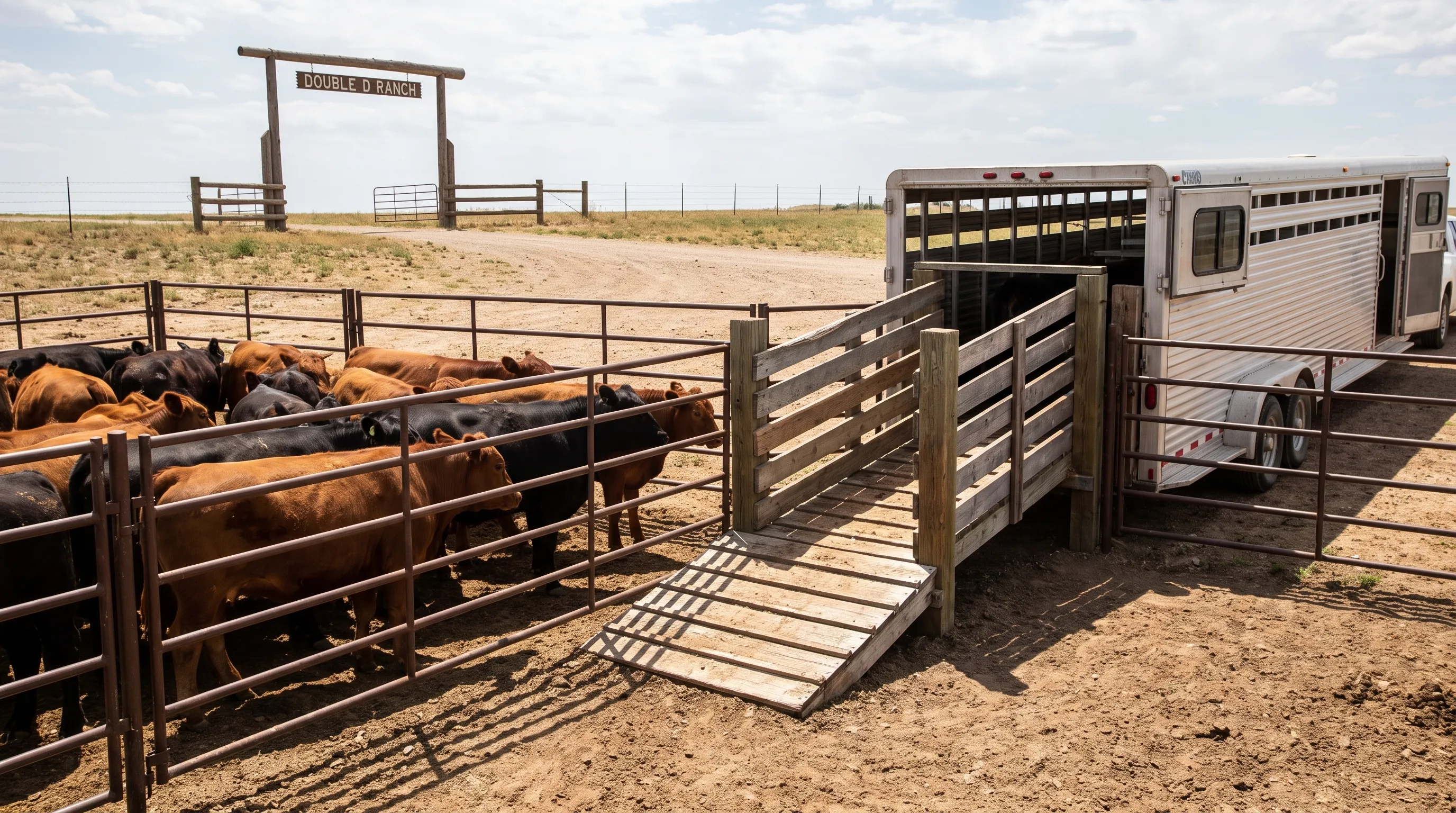
Use a listing that separates facts from assumptions
The following is an illustrative cattle listing, not a live load or a market-rate recommendation. Its dates, payment terms and animal details are examples only. A real shipment still requires confirmation of capacity, route feasibility and handling arrangements.
Field | Example wording |
|---|---|
Route | Ranch approximately 10 miles east of Amarillo, TX, to a receiving yard in Oklahoma City, OK. Verified addresses and entrance instructions available before booking. |
Animals | 40 feeder steers, estimated average weight 650 lb based on the shipper’s estimate. Estimated total animal weight: 26,000 lb. Final count to be confirmed before dispatch. |
Equipment | Cattle pot requested. Hauler must confirm suitable compartment arrangement, safe capacity and compatibility with both loading facilities. |
Pickup | November 3, 2026, from 7 to 9 a.m. Central. Cattle will be gathered and loading help available. |
Delivery | Same-day delivery requested. Receiving appointment must be agreed upon before booking, subject to the hauler’s trip review. |
Rate | $1,500 flat trip rate, including fuel. Example detention terms: $75 per hour after two hours at each facility, measured from the agreed appointment time or arrival time, whichever is later. |
Payment | Shipper pays within seven calendar days after receiving the invoice and signed delivery receipt. |
Contact | Named booking contact with a phone number and stated availability. |
Notice that estimates remain labeled as estimates. The description also identifies decisions that still need confirmation instead of presenting them as completed arrangements.
Check the listing, then keep the agreement current
Before you post a load, read the description as if you were a driver who knows nothing about your operation. Can you determine where the job begins and ends, what is moving, which equipment is requested and how payment works?
Resolve contradictions between the headline and the body. A headline that says “Friday pickup” should not sit above a description requesting Thursday. Check that the head count, average weight and total estimated weight agree. Make sure the contact can answer questions during the stated availability window.
Once a hauler is interested, use the conversation to confirm the remaining operational details, not to reveal information that should have been disclosed earlier. Agree on the final count, equipment, appointments, paperwork and charges before dispatch.
If the job changes after booking, contact the hauler directly. An increased count, different animal class or changed destination can alter capacity, timing and price. Updating a public description is not a substitute for getting agreement from the booked carrier.
Finally, withdraw or close any listing you control when the job is no longer available. Keeping unavailable work visible wastes drivers’ time and creates uncertainty about whether your next listing is current.
Frequently asked questions
Can I post a load with an estimated head count? Yes, provided you label it clearly and explain when the final count will be available. Give the hauler a realistic expected range if you have one. Confirm the actual count and its effect on capacity and payment before dispatch.
Should horse listings include more than head count and destination? Yes. Approximate size, separation needs, loading behavior and facility compatibility can affect whether the equipment is suitable. Identify any known handling concerns and confirm responsibilities for loading, unloading and required paperwork.
Does listing a trailer type guarantee that the animals will fit? No. Capacity depends on animal size, total weight, compartment configuration, equipment limits and applicable restrictions. The carrier must assess the specific shipment. A familiar head count from a previous trip is not enough to establish suitability.
What if I do not know the correct rate? Work out the offer before publishing rather than using “call for rate” as the entire payment description. Account for the route, timing, equipment and service requirements. Any advertised amount should distinguish firm terms from items that still require negotiation.
Put the details in front of livestock haulers
Livestock Way supports free load posting, upfront rates, rig-fit matching and direct shipper contact for cattle and horse transport across the Southern Plains.
Use the free livestock load-posting guide for publishing instructions. When your route, animal details, schedule and payment terms are ready, post a load on Livestock Way with the information a hauler needs to assess the job and confirm the next steps.