Now live across the Southern Plains — Amarillo · OKC · Fort Worth, and growing lane by lane


Livestock Hauler
What Livestock Transporters Should Confirm Before Pickup
5 minutes read
Livestock Way
Livestock transporters do not get paid for assumptions. Before the trailer leaves for a pickup, the load has to be clear, the animals have to be fit to haul and the people on both ends need to know exactly what is happening. A five-minute confirmation call can prevent the kind of problems that burn fuel, delay delivery, stress cattle or horses and turn a good-paying run into a dispute. This guide is a practical pre-pickup checklist for haulers who want fewer surprises at the chute, at the scale and at the delivery gate.
Why Pickup Confirmation Matters for Livestock Transporters
Livestock freight is not like boxed freight. The load can move, lose condition, overheat, crowd, fall behind schedule or be rejected if paperwork is wrong. Once animals are on the trailer, the hauler owns a big part of that risk, even when the original problem started before arrival.
Good confirmation does three things. It protects animal welfare, protects your margin and gives everyone a written reference if the plan changes. It also helps you decide whether the load truly fits your trailer, route and hours before you spend money getting to pickup.
What to confirm | Why it matters | Best source |
|---|---|---|
Animals and count | Prevents overcrowding, underloading and wrong equipment | Shipper or facility contact |
Pickup readiness | Avoids waiting on sorting, vet work or paperwork | On-site contact |
Documents | Reduces risk of refusal, delay or fines | Shipper, buyer, state requirements |
Rate and terms | Prevents payment disputes after delivery | Load posting or written agreement |
Route timing | Helps manage heat, cold, curfews and delivery hours | Hauler and receiver |
Confirm the Load Details Before You Roll
The best livestock transporters confirm the load in writing before burning deadhead miles. A phone call is useful, but a text, email or load-board message gives you a record of what was agreed. If a detail changes later, you can point back to the original terms without relying on memory.
Species, class, head count and estimated weight
Start with the animals, not the miles. “Cattle” is not enough detail. Calves, feeders, pairs, cull cows and bulls all change how you set gates, bedding, space and route timing. For horses, confirm whether they are weanlings, broodmares, stallions, performance horses or mixed ownership groups that need separation.
Ask for the estimated total weight, not just head count. A trailer that can physically hold a count may still be wrong for the weight, deck setup or axle limits. If the shipper says the count is approximate, ask when it will be finalized and whether you will be paid on actual head, loaded miles or a flat rate.
Rate, miles and what is included
Confirm the posted rate, loaded miles, pickup location, delivery location and any deadhead you are expected to absorb. If the rate was quoted before the final count was known, ask whether the price changes if the load is lighter, heavier or split across compartments.
Get clear on detention, layover, extra stops, reloading, washout requirements and tolls. Not every run needs a long contract, but every run needs enough detail to avoid the phrase “I thought that was included.” If you use a load board, favor loads where the rate is visible before you call.
Pickup and delivery contacts
A load can look simple until the driver gets to a locked gate with no cell service. Confirm names, phone numbers, backup contacts, gate codes, loading hours, delivery hours and whether a specific person must sign paperwork.
Ask for directions that a truck and trailer can actually use. Rural addresses, sale barns, ranch entrances and show grounds are often easier to find by landmark than by GPS pin. If the entrance is tight, muddy or easy to miss in the dark, you want to know before you arrive.
Confirm Paperwork, Health Requirements and Ownership Documents
Paperwork is where livestock transporters can lose the most time for the least visible reason. You may have the right trailer, the right rate and a clean route, but missing documents can still stop the load. Requirements vary by species, state, event, market, destination and purpose of movement.
For cattle, ask about bills of sale, brand inspection where applicable, movement permits, health certificates and any receiver-specific requirements. For horses, confirm Coggins status, health certificates and event or facility rules before you accept the pickup time. If you need a refresher, Livestock Way has a practical guide to Coggins and health certificates by state.
Do not assume the shipper has checked the rules just because the animals are ready to load. The shipper, buyer, veterinarian and state animal health officials may all be involved, but the driver is often the person standing at the gate when something is missing.
Document or detail | Common risk if missed | Confirmation question |
|---|---|---|
Health certificate | Receiver may refuse delivery | “Is the certificate completed for this destination?” |
Coggins for horses | Event, state or facility may reject entry | “Is the test current and attached?” |
Brand inspection | Delay in brand inspection states | “Is inspection done or scheduled before pickup?” |
Bill of lading | Payment and custody dispute | “Who signs at pickup and delivery?” |
Special receiver rules | Unloading delay or refusal | “Does the buyer require anything beyond state rules?” |
Match the Animals to Your Trailer, Compartments and Route
The right load is not just a load that pays. It is a load that fits your rig, your experience and the conditions on the road. Confirm trailer type, deck height, gate layout, ventilation, bedding, loading height and whether animals need to be separated.
For cattle, compartment planning matters when sizes or classes are mixed. A small group of calves behind heavy cows, an aggressive bull or a weak animal in the wrong spot can create trouble fast. For horses, confirm whether any animal hauls loose, tied, boxed or separated from others.
Weather should affect your acceptance decision, not just your driving style. Hot afternoons, freezing rain, high wind and long delays at a receiver can change whether the load is reasonable. If the route crosses metro traffic, steep grades or long open stretches, build that into the timing before pickup.
Confirm Animal Condition and Handling Expectations
Experienced livestock transporters know that “ready to go” can mean very different things depending on the yard. Before you back up, ask whether animals are sorted, counted, inspected and fit for transport. If the answer is vague, plan for extra time or ask for an updated pickup window.
Fitness to haul
Animals should be able to stand, walk, bear weight and tolerate the trip. If an animal is down, severely lame, exhausted, overheated or showing signs that it cannot travel safely, loading it can create animal welfare problems and liability. When in doubt, pause and get direction from the shipper, veterinarian or facility manager before it goes on the trailer.
This is especially important with market cattle, sale-barn pickups, older broodmares or animals coming out of stressful events. You are not diagnosing the animal, but you are responsible for not ignoring obvious transport concerns.
Loading setup and behavior
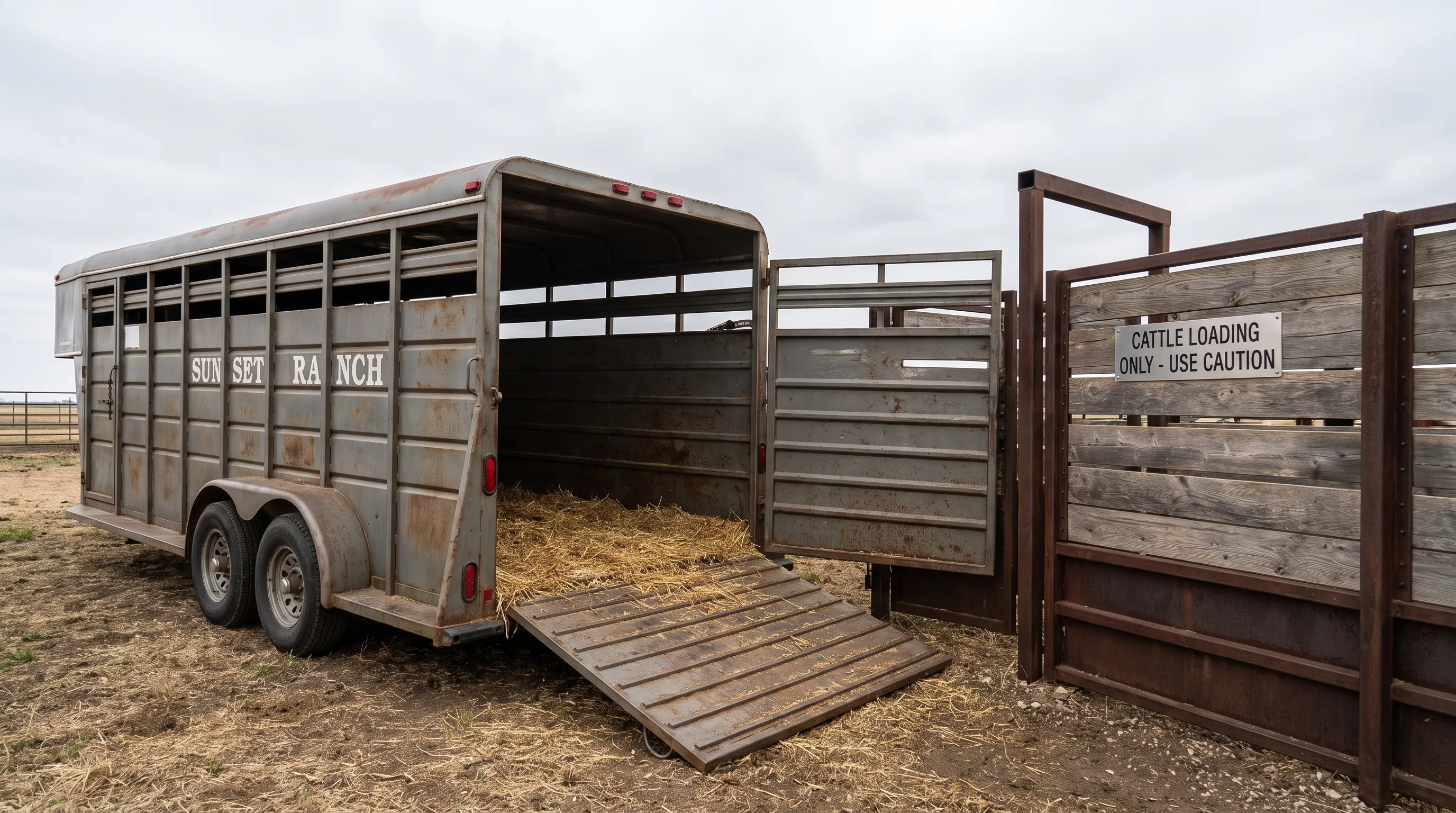
Confirm chute height, alley width, lighting, surface condition and whether help will be present. Mud, ice, broken gates, poor lighting and rushed handling all increase the chance of injury to animals and people.
Ask if there are known behavior issues. That includes kicker horses, hard-to-load horses, aggressive bulls, recently weaned calves or animals that have not been handled much. Training and animal handling standards matter in this work, and cattle haulers may benefit from reviewing what BQAT means for cattle transport before taking higher-risk loads.
Confirm Route, Timing, Feed, Water and Stops
A clean route plan is more than a GPS estimate. Livestock transporters should confirm delivery windows, unloading hours, traffic choke points, weather, fuel stops, rest options and whether the receiver can unload when you arrive. A late arrival with live animals is not the same as a late arrival with pallets.
For longer cattle hauls, think about shrink, heat load, standing time and how much schedule padding the rate allows. For horses, confirm whether the owner expects rest stops, feed, water, hay nets or other care instructions. If special instructions are given, get them in writing.
Hours-of-service rules and agricultural exemptions can also affect timing. The federal 150-air-mile agricultural exemption is often misunderstood, so review the plain-language breakdown of the 150-air-mile ag HOS exemption and check current FMCSA guidance when needed.
Do not let an unrealistic appointment time force an unsafe trip. If the route, animals or weather make the schedule too tight, say so before pickup. A professional hauler is expected to protect the load, not simply chase the clock.
Confirm Payment, Communication and Contingency Plans
Before pickup, livestock transporters should know exactly who is paying, how much is being paid, when payment is due and what proof of delivery is required. If the load came through a direct shipper relationship, confirm whether payment is by check, ACH, card, cash or another agreed method.
Also confirm what happens if the load changes. Common situations include fewer head than expected, delayed loading, a second pickup, a rejected animal, a receiver that closes early or a route that becomes unsafe because of weather. You may not be able to predict every problem, but you can agree on who gets called and how decisions are made.
This is where direct communication helps. A platform like Livestock Way is built around upfront rates, livestock-only loads and direct shipper contact, so haulers can decide whether a run fits before they commit. That does not replace your own judgment, but it gives you cleaner information at the start.
Keep the final agreement simple and written. At minimum, save the load details, rate, pickup and delivery contacts, animal description, special instructions and any terms for detention or changes. If a dispute comes up later, clear notes are worth more than a long memory.
Quick Pre-Pickup Checklist
Use this checklist before you leave for the pickup, then review it again before loading. It is easier to ask one more question in the driveway than to solve a preventable issue with animals already on the trailer.
Confirm species, class, head count and estimated weight.
Confirm pickup address, gate access, loading hours and backup contact.
Confirm delivery address, unloading hours and receiver contact.
Confirm rate, loaded miles, payment timing and proof of delivery.
Confirm health certificates, Coggins, brand papers or movement documents as needed.
Confirm trailer fit, compartment plan, bedding and ventilation.
Confirm animal condition, sorting status and any behavior concerns.
Confirm route, weather, fuel stops and realistic arrival time.
Confirm instructions for feed, water, rest stops or special handling.
Confirm what happens if loading is delayed, animals are rejected or the count changes.
Frequently Asked Questions
What should livestock transporters confirm first before pickup? Start with the animal details: species, class, head count, estimated weight and whether the animals are sorted and fit to haul. Those details determine trailer fit, rate accuracy, compartment setup and route timing.
Should a hauler accept a load if paperwork is not ready? Usually not without a clear plan. If health papers, Coggins, brand inspection or receiver documents are required, confirm when they will be ready and who is responsible before you drive to pickup.
How much of the pickup agreement should be in writing? Put the essentials in writing: rate, locations, contacts, animal description, count, special instructions, payment timing and terms for delays or changes. A short written record is often enough to prevent confusion.
What if the animals at pickup do not match the load details? Stop before loading and contact the shipper or load contact. A different count, weight, class or condition can affect safety, legality, payment and trailer fit.
Find Loads That Fit Before You Haul
The best pickup is the one where the rate, rig fit, shipper contact and livestock details are clear before you roll. Livestock Way helps cattle and horse haulers browse livestock-only loads with upfront rates, direct shipper contact and free load browsing, so you can spend less time guessing and more time hauling the right loads.