Now live across the Southern Plains — Amarillo · OKC · Fort Worth, and growing lane by lane


Equine Transport
An Equine Shipping Checklist for Auction Buyers
10 minutes read
Livestock Ways
Buying the horse is only part of the transaction. Equine shipping needs to be planned before the auction office closes, not after you discover that the horse must leave tonight. Payment clearance, health documents, loading arrangements and the receiving barn all have to line up before a driver can complete the pickup.
This checklist is for auction buyers arranging domestic transport, especially across the Southern Plains. Use it before bidding, again when booking the hauler and once more before authorizing release. If any requirement is unresolved, agree on a boarding or veterinary-care plan rather than rushing the horse onto a trailer.
Before bidding: confirm the auction’s release rules
Start with the sale office, not the transport quote. Every auction has its own payment and removal procedures, and a successful bid does not necessarily mean the horse can leave immediately.
Ask when payment must clear, what identification the collecting driver needs and whether the office requires written authorization from you. Confirm the removal deadline, office hours and any charges for holding the horse beyond the scheduled pickup window.
Also establish who provides feed, water and care while the horse waits. If the sale ends late or the paperwork cannot be completed that day, you need a named person responsible for the animal overnight.
Before committing to a bid, find out what is known about the horse’s loading history, handling and current health. An unfamiliar horse with limited handling may require different equipment and more time than a seasoned traveler. Treat missing information as something to resolve, not as evidence that the horse will load easily.
Buyer checkpoint: Know the last practical pickup time, not just the published sale end time. A driver arriving after the release office closes may be unable to collect an otherwise ready horse.
What belongs in your equine shipping budget?
The winning bid is not your delivered cost. Keep transport and auction-related expenses separate so that an attractive purchase price does not hide an unaffordable trip home.
Cost item | What to confirm before booking |
|---|---|
Auction charges | Buyer’s premium, applicable taxes and payment fees |
Veterinary work | Required examination, testing and travel documents |
Transportation | Total route price and whether the quote is shared or dedicated service |
Waiting and handling | Charges for delays, difficult loading or after-hours collection |
Temporary care | Boarding, feed and responsibility for arranging care |
Route changes | Charges for extra stops, overnight facilities or a changed destination |
Ask whether a mileage quote uses loaded miles, the carrier’s full route or another calculation. A per-mile number without that explanation is difficult to compare.
Get the total price, deposit terms, balance due date and cancellation conditions in writing. Ask what happens if the horse cannot travel because of illness or incomplete documents. Do not assume that an auction delay automatically entitles you to a refund or a free rescheduled trip.
Match the hauler to the horse, not just the route
For an auction purchase, equine shipping should be booked around the horse’s actual needs, including anything you do not yet know about its handling. Tell the carrier whether the animal is a stallion, mare with foal, youngster or inexperienced loader, and disclose known health or behavioral concerns.
Discuss the trailer configuration, available headroom, partitions and loading setup. Confirm whether other horses will be aboard, where additional pickups occur and whether the horse will transfer to another vehicle. A shared trip can involve a different schedule and exposure pattern than a dedicated haul.
Ask for recent horse-transport references, the business identity and any registration or operating authority applicable to the trip. Request insurance information and clarify what coverage applies to the horse, including exclusions and claim-reporting requirements. Do not assume that vehicle liability insurance covers injury to your animal.
Online visibility is not a transport credential. Website optimization and local SEO can help a service business appear prominently online, but they do not establish horse-handling experience. Verify the people, equipment and written terms behind the listing before sending a deposit.
Finally, agree on who will actually drive and load. If another carrier may perform the trip, require that arrangement to be disclosed before pickup.
Verify health documents for the actual destination
Interstate equine shipping commonly involves a negative equine infectious anemia test, often called a Coggins test, and a certificate of veterinary inspection, or CVI. Requirements, exemptions and document validity periods vary by destination and type of movement. Check the current rules rather than relying on what was accepted at a previous auction.
Use the USDA APHIS animal movement guidance to locate the relevant requirements, then confirm details with the destination state’s animal health authority and the veterinarian issuing the documents. Livestock Way’s guide to Coggins tests and health certificates by state can help organize that review.
Match the documents to the actual horse using the identification recorded, such as markings, photographs or a microchip where applicable. An auction lot number alone is not a substitute for the identification required on health documents.
Confirm who orders any missing veterinary work, who pays and when the completed documents will reach the driver. A negative Coggins test is not a general certificate that the horse is free of illness, and a bill of sale does not replace required health paperwork.
Build one release packet for the auction and driver
A clear release packet keeps equine shipping from stalling over mismatched names, missing phone numbers or an unpaid invoice. Send the same confirmed information to the sale office and carrier, while limiting sensitive payment details to the people who need them.
Include the following:
Horse identification: Auction name, lot number, description and identifying photographs, plus registered name or microchip details if available.
Release authority: Paid invoice or other required proof of payment, buyer’s name and authorization for the named carrier to collect the horse.
Pickup instructions: Exact entrance, loading location, release-office hours and a working contact number.
Travel documents: Required health paperwork and confirmation of whether originals, electronic records or both are accepted.
Destination details: Physical delivery address, trailer access instructions and the receiving person’s number.
Care and emergency instructions: Known handling concerns, veterinary directions and a reachable decision-maker if problems arise.
Ask the auction office to confirm receipt rather than assuming an emailed attachment was processed. The driver should also acknowledge that the horse, pickup window and destination match the booking.
If you are arranging transport through a load listing, use these details to create a listing haulers can act on. Describe unknown handling honestly instead of labeling an untested horse an easy loader.
Set loading conditions and a stop-work plan
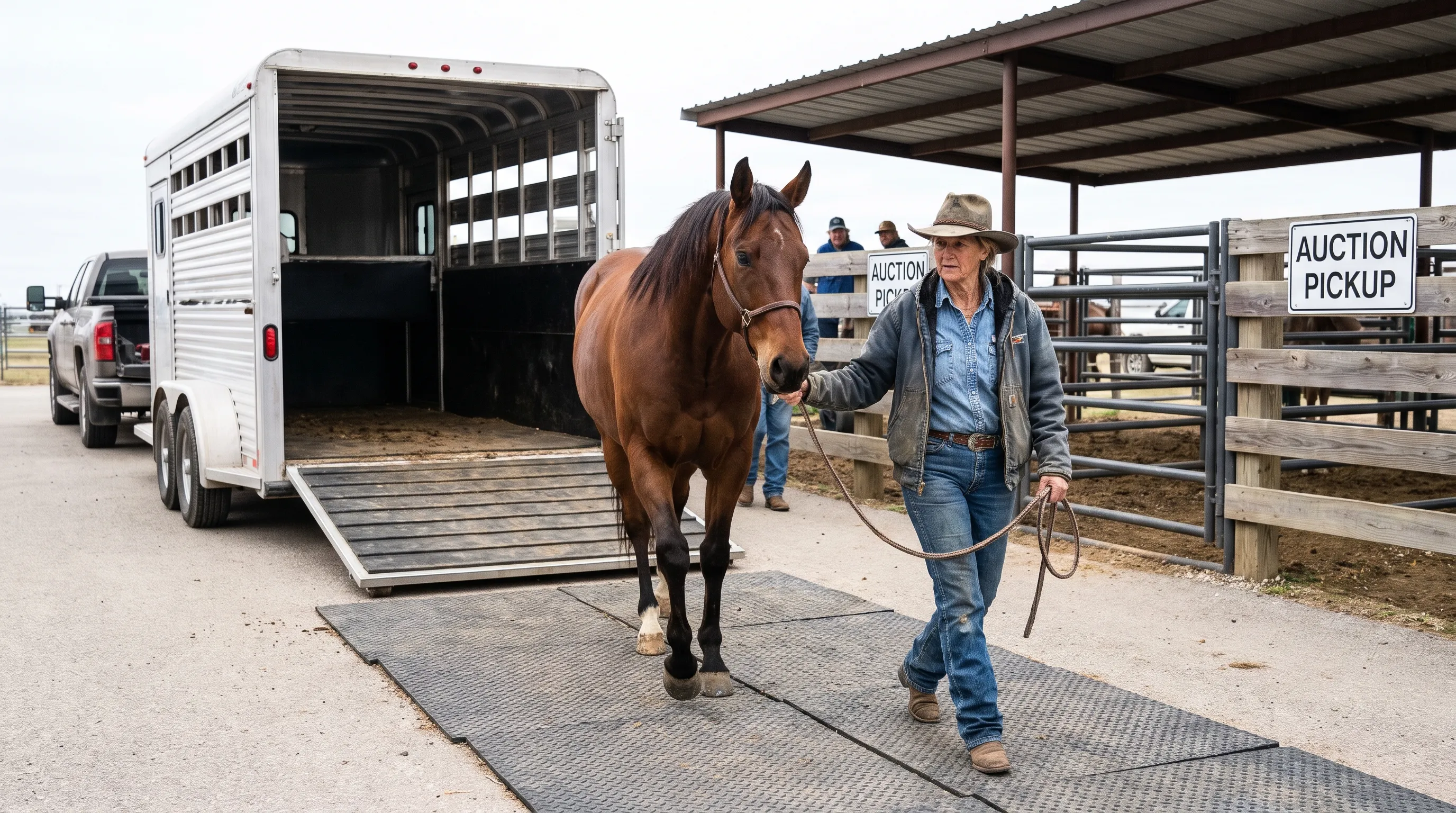
The pickup stage of equine shipping is not the time to discover that nobody is available to catch the horse or that the loading area is inaccessible. Confirm who brings the horse from its pen, who handles it at the trailer and whether suitable loading facilities will be available.
Ask the auction staff and hauler to report any change in condition before loading. Fever, coughing, nasal discharge, diarrhea, lameness or unusual dullness warrant veterinary advice rather than a departure deadline overriding concern. A veterinarian should assess questionable fitness to travel.
Agree on what happens if the horse will not load safely. Options may include more time, an experienced handler, different equipment or rescheduling. Forceful loading under time pressure can endanger the horse and everyone nearby.
Do not arrange sedation simply to make collection convenient. Any sedative use should be directed by a veterinarian and coordinated with the carrier because it can affect balance and transport safety.
Before departure, request a brief condition update and clear photographs when practical. Record any visible injury or concern and confirm that the correct horse is aboard. These records support a reliable handoff, but they do not replace an examination when one is needed.
Plan the trip and receiving barn together
Confirm the expected travel window, planned stops and how the driver will communicate delays. Traffic, weather, additional collections and the horse’s needs can change arrival time, so avoid organizing the receiving crew around an exact minute.
Ask how the carrier manages water, forage, ventilation and observation during travel. For a longer journey, discuss the rest plan and any overnight unloading facility. Let the horse’s veterinarian advise on individual care needs rather than applying a generic feeding or medication schedule.
A good equine shipping plan also accounts for what happens after unloading. Prepare a secure receiving area, appropriate fencing and access that accommodates the truck and trailer. The person meeting the driver should know the horse’s identity and be authorized to accept delivery.
Because an auction purchase may have an uncertain exposure history, arrange separation from resident horses. Use separate water and equipment where practical, and ask your veterinarian to set the isolation period and monitoring plan. Do not unload straight into a shared herd simply because the horse appears healthy.
Keep the driver’s contact details available until the handoff is complete. If the destination changes during travel, discuss access, timing, paperwork implications and additional charges before directing the truck elsewhere.
Make the final go-or-hold decision
Before authorizing departure, use this short check. Every item should have a clear answer, not an assumption that somebody else handled it.
Checkpoint | Ready-to-go confirmation |
|---|---|
Auction release | Payment accepted and the named carrier authorized |
Correct horse | Physical identity matches the sale and travel records |
Health and paperwork | No unresolved fitness concern and required documents available |
Carrier agreement | Driver, equipment, total price and payment terms confirmed |
Loading support | Responsible handler and suitable facilities available |
Receiving arrangements | Destination ready and recipient reachable |
Contingency | Named contact can approve veterinary care or a delay |
If one item fails, pause and resolve it with the responsible party. A missed departure can create costs, but sending an unfit horse or an incomplete shipment can create a much larger problem.
Keep the final equine shipping agreement, release authorization and condition records together. At delivery, note the arrival time, check the horse’s condition and document any concern promptly under the carrier’s reporting terms.
Frequently asked questions
How much does it cost to transport a horse from an auction? There is no reliable universal price. Distance, route availability, shared versus dedicated service, trailer needs and pickup constraints affect the quote. Compare written total prices for the same service, including waiting, boarding and any additional stops, rather than comparing mileage rates alone.
Can a horse leave the auction the same day? Sometimes, provided payment has cleared, release authorization is complete, the horse is fit to travel and all required documents are available. Ask the sale office about veterinary availability and release hours before counting on same-day collection. The auction’s removal deadline does not guarantee that every horse will be ready to leave.
What is equine shipping fever? Shipping fever is a term commonly used for transport-associated respiratory illness, including pleuropneumonia. After arrival, fever, depression, reduced appetite, coughing, nasal discharge or changes in breathing require prompt veterinary attention. Labored breathing or marked distress is an emergency. Ask your veterinarian how to monitor the new horse and when to report changes.
Should I book transport before I win the bid? Discuss route availability, equipment and likely timing beforehand, but make the booking conditional on purchase unless you knowingly accept other terms. Confirm deposit and cancellation conditions in writing. After buying, provide the actual horse details and release requirements before treating the reservation as a complete transport plan.
Find a haul that fits the purchase
Once the horse, documents and release window are confirmed, browse horse loads or post your transport need on Livestock Way. The livestock-only board offers upfront rates, rig-fit matching and direct shipper contact, with no broker in the middle. Confirm the complete pickup and delivery agreement with the hauler before authorizing release.