Now live across the Southern Plains — Amarillo · OKC · Fort Worth, and growing lane by lane


Load Board
Can a Load Board Free to Use Protect Your Time?
10 minutes read
Livestock Way
A load board free to use can protect your time, but only if it helps you rule out unsuitable work before you start making calls. Free access alone does not prevent an afternoon spent chasing unavailable loads, mismatched trailers or pickup windows you cannot meet.
For cattle and horse haulers, the useful question is not just whether browsing costs money. It is whether the board helps you move from searching to a workable booking without disrupting your current haul. That takes clear listings, a bounded search routine and a few checks before you commit.
Count the time you spend before a load is booked
A subscription fee is easy to see. Search time is less visible, especially when it disappears in small pieces between dispatch calls and deliveries.
Consider the work that happens before you earn anything from a prospective load:
Time cost | What creates it | What helps reduce it |
|---|---|---|
Reviewing unsuitable listings | Wrong livestock type, trailer or lane | Equipment and route details |
Repeated phone calls | Missing rate or pickup information | Clear terms before contact |
Rearranging your schedule | An unrealistic loading window | Confirmed appointment expectations |
Reworking a booking | Requirements emerge after acceptance | Written confirmation of agreed details |
Track these minutes separately from driving and loading. A short search that produces one workable conversation may be more useful than an hour that produces a long list of possibilities.
The goal is fewer dead ends, not more listings viewed. Keep that distinction in mind when judging whether free access is helping your operation.
How can a load board free to use cut wasted calls?
The board needs to show enough information for you to reject a poor fit without contacting the shipper. For livestock work, that starts with the animal type, origin, destination, equipment requirements and offered rate.
Upfront pricing removes one reason to call, but it does not settle the whole job. A rate still needs to make sense alongside empty miles, loading time and the route back to your next commitment. Our guide to using visible rates to make faster decisions explains that part of the screening process.
Set your boundaries before browsing: where your rig will actually be available, which loads it can handle and when you must be finished. A Fort Worth pickup is not automatically convenient just because you operate in the Amarillo–OKC–Fort Worth corridor.
Use a defined search window while safely parked. Stop when you have a manageable shortlist. Rechecking the same possibilities all afternoon can consume the time you were trying to save.
Give each promising load a short verification call
A load board free to browse saves time when the first conversation resolves the remaining uncertainties instead of repeating information that should already be visible.
Before calling, write down what you know and what still needs confirmation. Keep the conversation focused on the questions that could change your decision:
Availability: Is the load still open, and who has authority to book it?
Livestock and equipment: What are the animal count, class, estimated weight and trailer requirements?
Timing: What are the pickup and delivery windows, and how are loading appointments handled?
Site access: Are there approach restrictions, facility instructions or loading arrangements that affect your rig?
Commercial terms: Who pays, when is payment due and what applies if loading or unloading runs late?
An unanswered question does not automatically mean a bad load. It means you do not yet have enough information to commit.
Verify the shipper’s identity and contact details rather than treating a listing as proof of legitimacy. Once you agree, get the key details in writing, including any negotiated waiting-time terms. Do not assume detention pay exists unless it has been agreed.
If the conversation keeps expanding without resolving basic requirements, pause the booking. Your schedule should not depend on several people eventually supplying essential information.
Put equipment readiness on the same calendar
A load board free to use cannot recover the hours lost when you book around a rig that is not ready. Availability means more than having an empty trailer.
Include cleaning, required inspections, known repairs and any equipment changeover in your planning. For livestock transport, those tasks affect whether you can present a suitable rig at the promised time. Do not squeeze them out to make a listing appear workable.
Repair scheduling deserves particular care when a shop is waiting on specialized work. Companies such as Jakom, a custom shaft and roller manufacturing and repair specialist, illustrate the kinds of machining services that may sit outside routine maintenance. If your repair involves a custom component, have your shop confirm the required work and a realistic completion window before you promise another pickup.
Apply the same discipline to your own availability. Check applicable driving and on-duty limits, rest needs and existing commitments before accepting a job. A booking that only works if every stop goes perfectly leaves little room for loading delays or changing conditions.
Do not offer a pickup window until both the driver and the equipment can meet it.
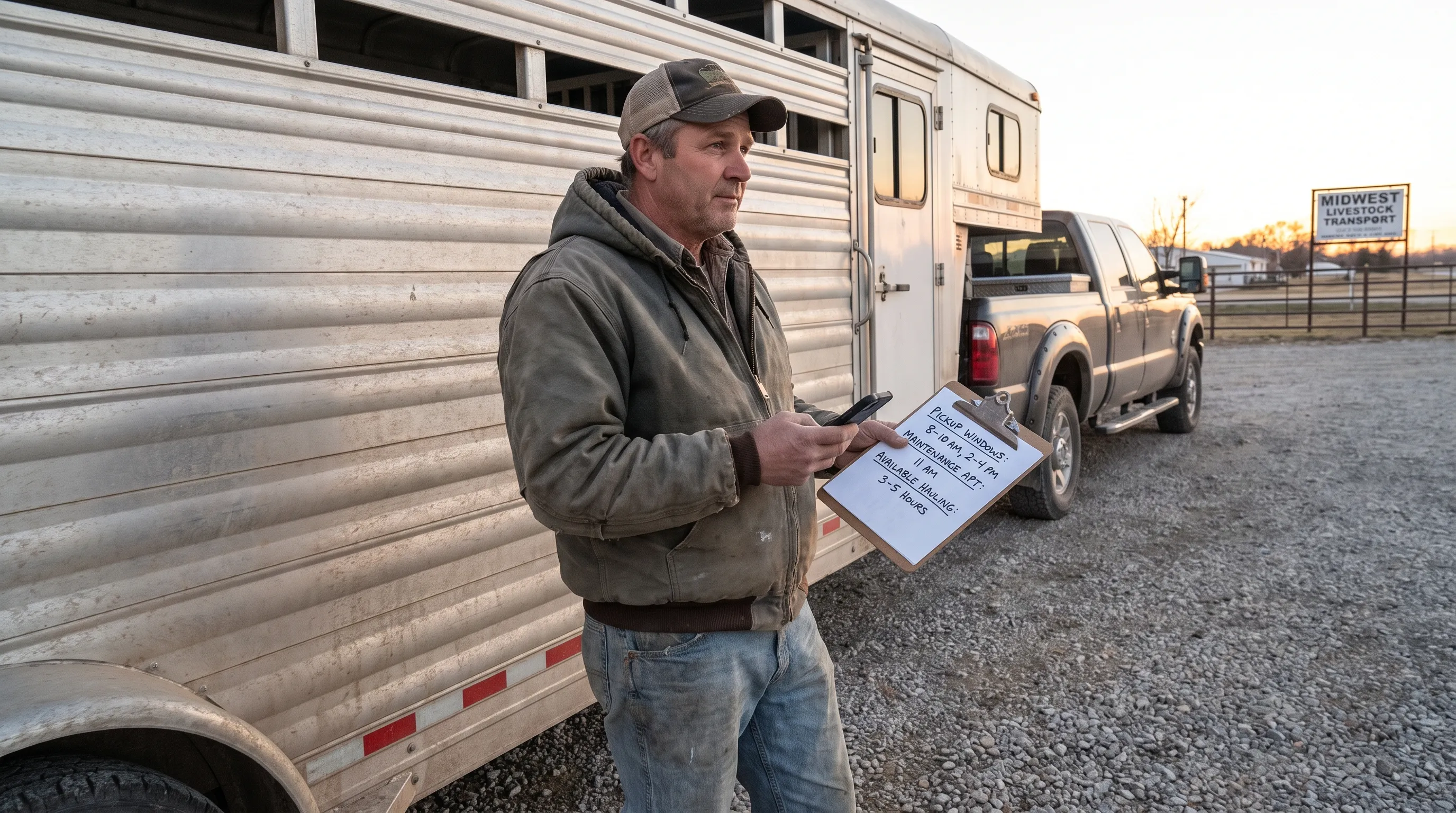
Measure whether free browsing is actually saving time
A load board free to use should earn its place in your routine through useful results, not simply through the absence of a subscription bill.
For a week, record search minutes, shipper calls, qualified opportunities and confirmed bookings. Define a qualified opportunity as one that fits your equipment, route, schedule and basic commercial requirements. A listing you cannot haul does not belong in that count.
Here is an illustrative comparison, not a claim about typical platform performance:
Activity | Calling every prospect | Screening before calling |
|---|---|---|
Review 10 listings at 2 minutes each | 20 minutes | 20 minutes |
Make calls averaging 5 minutes | 10 calls, 50 minutes | 3 calls, 15 minutes |
Total search and call time | 70 minutes | 35 minutes |
The second approach saves 35 minutes in this example by eliminating seven calls before they happen. It does not guarantee a booking or higher earnings.
Watch the outcome as well as the time. If tighter screening eliminates workable loads, adjust your boundaries. If most calls reveal the same missing detail, make that detail an earlier screening requirement. The purpose is to reduce avoidable work without overlooking jobs you can realistically complete.
Use Livestock Way for a focused search
A load board free to browse is most useful when its available information matches the decisions you need to make. Livestock Way provides free load browsing and free load posting for cattle and horse transport across the Southern Plains.
Its upfront rates let you assess the offered amount before contacting a shipper. Rig-fit load matching helps focus the search on suitable equipment, while direct shipper contact lets you clarify the job without a broker middleman. These features address different sources of wasted effort, but none replaces your own booking checks.
For an Amarillo, Oklahoma City or Fort Worth search, start with your actual release location and earliest realistic pickup time. Review suitable work, shortlist the loads worth discussing and confirm the details directly.
Livestock Way also offers 24/7 human support. That provides a way to seek help, but it should not be treated as a guarantee that every load-related question or delay can be resolved immediately.
Frequently asked questions
Does a free load board mean the haul has no additional costs? No. Free browsing or posting describes access to the board. Fuel, empty miles, driver time, equipment costs and other trip expenses still affect whether a haul is worth accepting.
Can a load board free to use guarantee that a listing is available? No. Confirm availability with the shipper before committing equipment or changing your schedule. The agreed pickup window and booking status matter more than the fact that a listing appeared during your search.
How long should I spend searching for loads? Use a window that fits your operation, then judge it by results. If browsing repeatedly produces few qualified opportunities, change the lane, timing or equipment criteria rather than extending the search indefinitely.
What should I confirm before accepting livestock work? Confirm animal and equipment requirements, site access, pickup and delivery expectations, payment terms and responsibility for delays. Make sure the work also fits your driver availability and equipment readiness.
Start with one lane and one usable window
Try a focused search on Livestock Way using your next available rig, a realistic pickup area and a firm time window. Review the posted rates, contact suitable shippers and confirm the terms before committing.
Then compare the time spent with the number of workable opportunities found. Free access protects your time when it helps you reach a sound decision sooner, including a clear decision to pass.