Now live across the Southern Plains — Amarillo · OKC · Fort Worth, and growing lane by lane


Load Board
Why a Load Board With Rates Helps You Decide Faster
10 minutes read
Livestock Way
A load board with rates helps livestock haulers answer the first business question before making a call: does this job deserve a closer look? When the offered price is visible, you can compare it with the pickup location, destination and equipment requirements instead of chasing basic information from every shipper.
That matters when you are choosing between cattle or horse loads across the Amarillo, Oklahoma City and Fort Worth corridor. A larger payment might require a long empty run. A smaller payment might fit your current location and leave you better positioned for the next job. Without the rate, neither opportunity is easy to evaluate.
The advantage is faster screening, not automatic booking. Visible pricing lets you reject poor matches early and spend your calls confirming the loads that could actually work.
How a load board with rates changes the first decision
When a listing leaves out the price, the phone call becomes part of your initial screening process. You need to reach someone, explain which load you mean and establish the compensation before deciding whether to continue.
An upfront rate moves that basic check ahead of the conversation. You can evaluate the offer when you see it, even if the shipper is not immediately available. The call can then focus on the details that determine whether the job is workable.
For an owner-operator handling dispatch between other responsibilities, that changes where attention goes. Instead of treating every nearby listing as a lead worth pursuing, you can separate likely candidates from obvious mismatches.
It also makes your first conversation more useful. You already know the advertised amount, so you can ask whether it covers the full trip, what assumptions it depends on and which additional charges require agreement.
A visible rate does not guarantee a good load. It gives you enough information to decide which loads merit further investigation.
Screen for fit before comparing the money
A load board with rates is most useful when you apply a few firm requirements before ranking offers by price. A high-paying load is irrelevant if your trailer cannot safely handle it or the pickup window is impossible.
Start with three checks:
Equipment and animal fit: Confirm the species, expected head count or weight and required trailer configuration against your equipment’s safe capacity and suitability.
Location and schedule: Check where the truck will actually be available, the empty miles to pickup and whether the loading and delivery windows are achievable.
Business fit: Identify the rate basis, likely trip expenses and any missing terms that could materially change the offer.
These are screening checks, not a substitute for final confirmation. A listing may be detailed enough to rule a load out without being detailed enough to accept it.
Once a load clears those requirements, compare the money. That order prevents a strong headline price from pulling you into a job that fails on trailer fit or timing.
Keep the initial decision simple: reject, clarify or shortlist. You do not need to settle every operational detail before deciding that a listing deserves a call.
Compare the whole trip, not just the advertised payment
Two loads with visible prices are easier to compare, but the larger payment is not necessarily the better opportunity. Empty miles can change the picture before fuel, labor or waiting time enter the calculation.
Consider this illustrative example, not a market-rate benchmark. Assume both loads meet your equipment and scheduling requirements and the posted amounts are flat trip payments.
Comparison | Load A | Load B |
|---|---|---|
Posted payment | $2,100 | $1,800 |
Loaded miles | 500 | 450 |
Empty miles to pickup | 200 | 50 |
Total miles through delivery | 700 | 500 |
Gross revenue per total mile | $3.00 | $3.60 |
Load A pays $300 more, but requires 200 additional miles. Load B produces more gross revenue per mile across the trip through delivery.
A load board with rates makes that first-pass comparison possible without calling both shippers just to uncover the price. You can then investigate expected waiting time, delivery access and where each job leaves your truck.
Neither figure is profit. This example excludes operating expenses and any repositioning after delivery. For a deeper explanation of pricing methods and expenses, Livestock Way’s guide to how livestock hauling rates actually work covers the calculation beyond the initial screen.
The practical lesson is to use the same comparison basis for every shortlisted load. Comparing one offer on loaded miles and another on total miles can produce a misleading ranking.
Separate a visible rate from confirmed terms
Upfront pricing removes an information gap, but it does not resolve the whole agreement. You still need to know exactly what the number means.
For example, a flat trip amount and a per-head quote are not directly comparable until you confirm the applicable head count. A per-mile quote needs a clear mileage basis. You also need to establish whether the listed compensation includes extra stops or other requested work.
With a load board with rates, the conversation can move directly to these exceptions rather than starting with “What does it pay?” Ask which circumstances could change the final amount and how those changes will be authorized.
Payment timing matters separately from the advertised price. Confirm who owes the payment, what documentation is required and when payment is due. A visible rate is not proof of a shipper’s identity, reliability or ability to pay.
Treat the listing as an offer to evaluate, not a complete hauling agreement. Before committing, get the agreed rate, scope and payment terms in writing through a method both parties can retain.
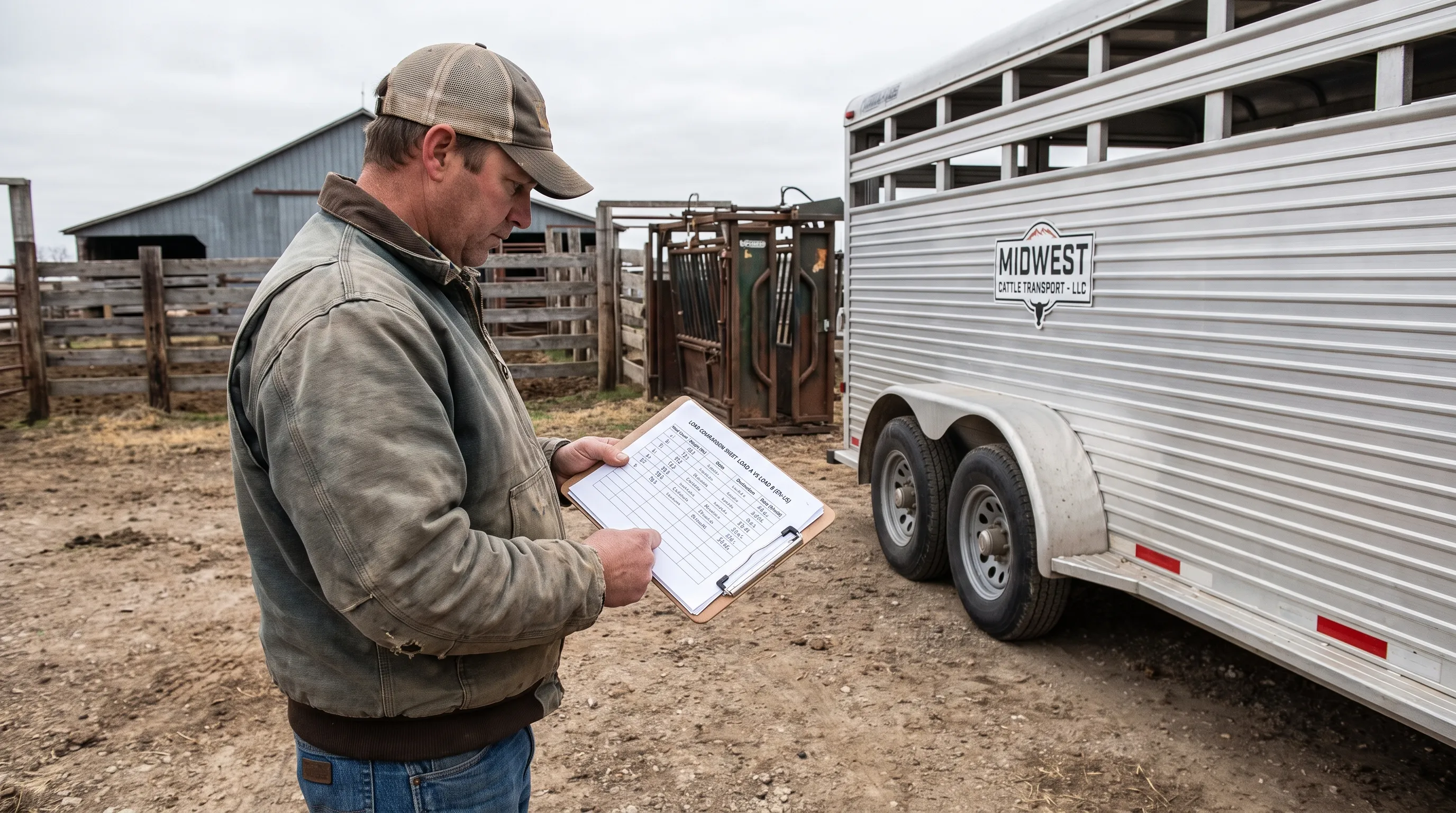
Keep vehicle suitability in the pricing decision
Fast decisions are only useful when they remain operationally sound. Equipment fit should stay part of the comparison after a load reaches your shortlist, especially if the animal count or estimated weight changes during the conversation.
This principle applies beyond livestock transport. A Dutch guide to matching a refrigerated delivery vehicle to its route and load evaluates vehicle suitability through payload, route demands and total operating costs rather than purchase price alone. The equipment requirements are different, but the decision principle is relevant: judge the vehicle and the work together.
For cattle and horse haulers, that means verifying safe capacity, appropriate compartment arrangements and practical loading and unloading conditions. Do not assume a higher payment compensates for unsuitable equipment.
A load board with rates helps you identify promising economics early, while rig-fit information helps establish whether those economics apply to your truck and trailer. You need both before an offer belongs on the serious shortlist.
If a shipper revises the load details, reassess the fit and price together. An earlier screening decision may no longer hold.
Use the shipper call to resolve the remaining questions
Once you have a qualified shortlist, make the conversation specific. Explain which listing you are calling about, where your truck will be available and what equipment you have. Then confirm the details that could change your decision.
The most useful questions concern the actual pickup and delivery windows, animal numbers and condition, loading assistance, required paperwork and the complete payment agreement. Establish how delays or changes will be handled before they occur.
You can use Livestock Way’s guide to what livestock transporters should confirm before pickup to move from an attractive listing to a properly checked job. Rate visibility should shorten discovery, not replace operational preparation.
A load board with rates also helps you know when to stop pursuing an offer. If a clarified term makes the trip unworkable, you can move to the next qualified candidate rather than restarting your search from scratch.
Keep brief notes on why you accepted or rejected each shortlisted load. Over time, those reasons can help you recognize which lanes, schedules and shipper requirements suit your operation.
Frequently asked questions
Does a posted rate mean the load is ready to book? No. Confirm availability, equipment requirements, animal details, scheduling and the full payment agreement before committing. The rate supports screening but does not complete the booking process.
Is the highest-paying livestock load always the best choice? No. Empty miles, trip duration, expenses and your location after delivery can make a lower-paying load more suitable. Compare the complete trip using consistent assumptions.
Can a load board with rates eliminate phone calls? It can reduce calls made only to discover the price. Direct communication is still valuable for confirming animal handling requirements, timing, paperwork and agreed terms.
What should I do when the rate basis is unclear? Ask whether the amount is a flat trip payment or depends on mileage, weight or head count. Do not compare or accept it as a fixed total until that basis is confirmed.
Start with loads you can evaluate
Browse livestock loads on Livestock Way to see upfront rates for cattle and horse hauling opportunities across the Southern Plains. Free browsing, rig-fit matching and direct shipper contact let you screen the offer before starting the conversation.
Use the posted price to build your shortlist, then confirm the full job before committing your truck.