Now live across the Southern Plains — Amarillo · OKC · Fort Worth, and growing lane by lane


Livestock Hauler
How a Livestock Network Creates Better Hauling Lanes
10 minutes read
Livestock Way
A livestock network helps hauling lanes become more predictable, more profitable and less dependent on guesswork. In cattle and horse hauling, a lane is not just a line on a map from Amarillo to Oklahoma City or Fort Worth. It is a repeatable pattern of shippers, pickup windows, trailer needs, rates, rest stops, washout options and backhaul possibilities. When those pieces are scattered across phone calls, social posts and one-off referrals, haulers spend more time hunting than hauling. When they are connected in one market, both sides can see who fits the job, what the load pays and how that trip might connect to the next one.
What a livestock network changes about lane building
A lane becomes valuable when it repeats. One good load can pay today, but a dependable lane helps a hauler plan fuel, time, trailer use and relationships weeks ahead. The difference is information density: how much useful detail a hauler can see before committing miles, time and animal-care responsibility.
A fragmented market hides that detail. A rancher may know cattle are moving next Thursday, a horse owner may need a ride after a sale and a hauler may be unloading nearby that same afternoon, but if those people are not connected, the opportunity disappears. In a livestock network, those signals can meet earlier, which makes lane planning less reactive.
That matters most in livestock because load fit is not optional. A dry van can chase broad freight, but a cattle pot, stock trailer, decker or horse trailer has limits tied to species, head count, facility access, compartments, timing and animal condition.
Better lanes start with better load visibility
Haulers often talk about finding loads, but lane building is really about seeing load flow. A single listing tells you what is available now. A pattern of listings shows where animals are moving, which days are active, what equipment is needed and whether a backhaul is realistic.
That visibility changes the questions a hauler asks. Instead of “Can I cover this trip?” the better question becomes “Can I make this trip fit my week?” A cattle load from the Panhandle into North Texas may look fine by itself, but the lane is stronger if there is likely movement back toward western Oklahoma, a nearby sale barn, or a shipper who moves regularly.
For a deeper look at why livestock-specific listings beat generic freight searches, see this breakdown of cattle hauling loads on a livestock load board versus freight boards. The short version is simple: livestock loads carry details that broad freight boards are not built to handle well.
The core signals that make a lane worth running
A good livestock network does not just show more loads. It helps haulers evaluate whether a lane fits their real operating costs and equipment. The right lane has enough margin, manageable timing, compatible facilities and a practical next move after delivery.
Lane signal | Why it matters for haulers | Why it matters for shippers |
|---|---|---|
Upfront rate | Helps calculate all-miles profit before accepting | Reduces back-and-forth negotiation |
Origin and destination patterns | Reveals recurring lanes and backhaul options | Improves carrier availability over time |
Trailer fit | Prevents wasted calls on loads a rig cannot handle | Helps match animals with appropriate equipment |
Pickup and delivery timing | Protects hours, animal care and schedule reliability | Reduces missed windows and rushed handling |
Direct contact | Speeds up questions about facilities and paperwork | Builds trust with dependable haulers |
Rate visibility is especially important. A high-looking trip can fall apart once deadhead, fuel, layover time, washout, insurance, maintenance and empty return miles are counted. If you want to sharpen that math, this guide explains how livestock hauling rates actually work without treating the posted rate as the whole story.
How direct connections create repeat business
Better lanes usually come from better relationships. A shipper who trusts a hauler will often call again, especially when the hauler communicates clearly, arrives prepared and handles livestock with care. A hauler who understands a shipper’s facility, loading style and paperwork expectations can work faster with fewer surprises.
A livestock network supports that relationship by making the first connection easier. Instead of routing every conversation through a broker or chasing vague posts, shippers and haulers can start with the load details that matter. Once both sides know the rate, equipment fit and timing, the conversation can move to practical questions: gate access, chute setup, animal condition, brand papers, health documents and delivery contact.
This is where networks create compounding value. One direct load can become a repeat lane. A repeat lane can become a preferred call. A preferred call can reduce unpaid searching, especially when the same corridor sees regular cattle or horse movement.
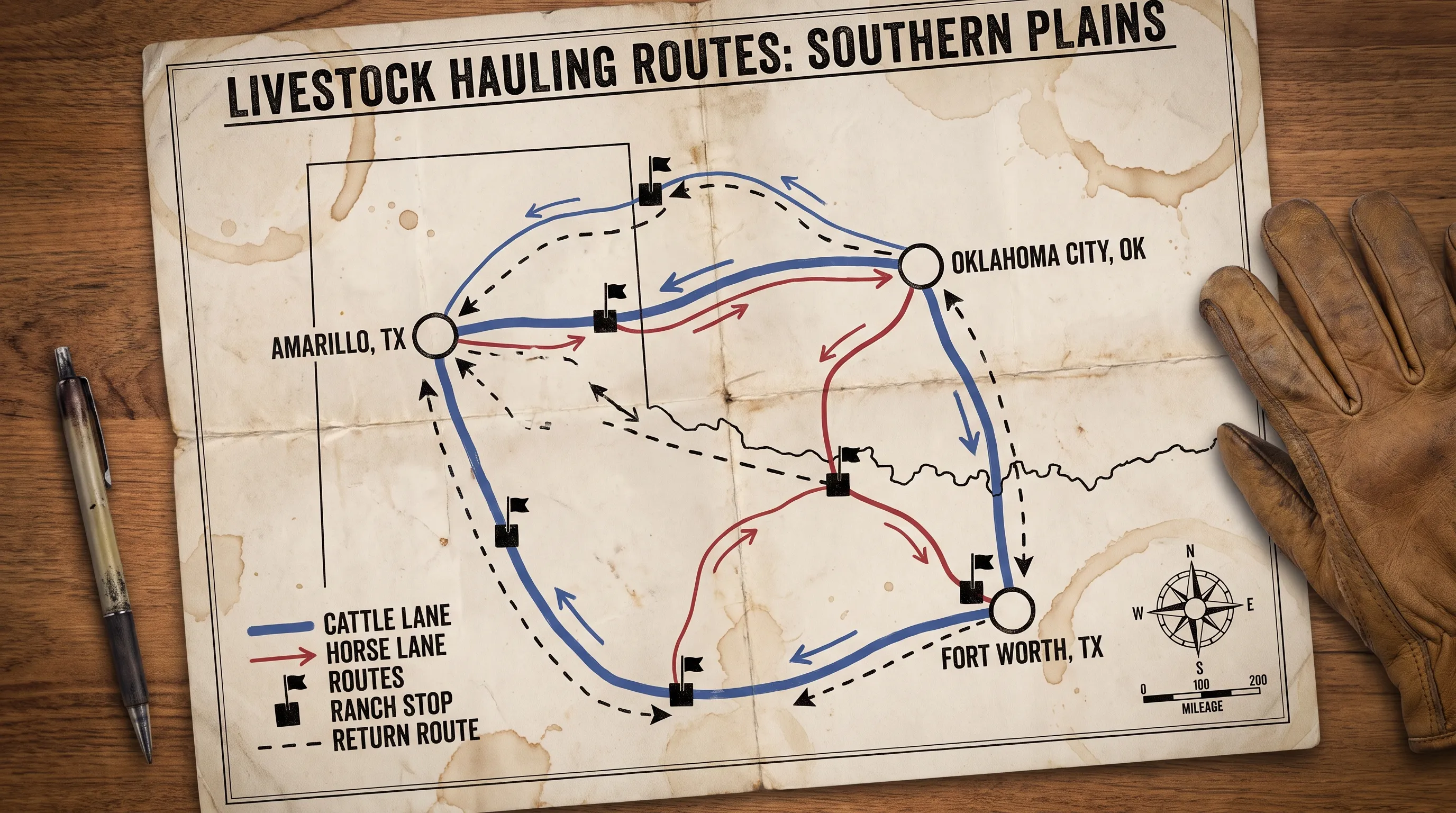
Why better lanes reduce empty miles
Empty miles are one of the quietest drains on a livestock hauling business. They do not always show up in the posted rate, but they hit fuel, tires, maintenance, hours and driver fatigue. A load that pays well in one direction may still be weak if the truck has to bounce too far to the next pickup.
In a livestock network, lane quality improves when haulers can compare not just the loaded trip but the surrounding market. The useful question is not only where the animals are going. It is where the trailer will be after delivery, what type of livestock moves near that destination and whether the return direction has enough demand to justify the trip.
This is why all-miles math matters. A $3 loaded mile can lose appeal if it requires a long unpaid reposition, while a lower loaded rate may perform better when it connects cleanly into the next job. For practical planning, Livestock Way’s guide on cutting empty miles between cattle hauling loads is a useful companion to lane strategy.
Data patterns matter, but livestock judgment still leads
Networks are valuable because they make patterns easier to spot. The same principle appears in other markets where participants use shared, verified activity to benchmark decisions. For example, anonymous portfolio sharing tools for retail investors help users compare allocations and trends without exposing private identity. In hauling, the useful benchmark is different: lane demand, rate clarity, direct shipper activity, trailer fit and repeat movement.
Still, livestock hauling is not a spreadsheet-only business. A lane that looks efficient on paper can fail if the pickup facility is difficult, the schedule is too tight, the weather turns rough, or the animals need more careful handling. Experienced haulers weigh the posted information against road knowledge, stockmanship and equipment limits.
The best livestock network strengthens that judgment rather than replacing it. It gives haulers more context before they commit, then leaves room for the professional questions that protect animals and margins.
What shippers gain from stronger hauling lanes
Hauling lanes are not just a hauler concern. Shippers benefit when the right trucks regularly move through their area because availability improves and calls become easier. A rancher, trainer, sale barn or buyer can spend less time explaining the same basics if they are working with haulers who already understand the corridor.
For shippers, a livestock network can also reduce mismatch. Posting to a broad audience may create noise, but posting where livestock haulers are already looking increases the chance that the first conversations are relevant. The goal is not to attract every truck. The goal is to attract the right rig, at the right time, for the right animals.
Clear listings also protect relationships. When the rate, route, livestock type and timing are visible early, both sides can decide faster whether the job fits. That saves time for the shipper and prevents haulers from chasing work that never made economic sense.
What haulers should track on every lane
Good lane building gets easier when haulers keep notes. Memory helps, but written records make patterns harder to miss. You do not need a complicated system to start. Track the details that change your true net, then compare similar trips over time.
Useful lane notes include:
Loaded miles and empty miles before and after the job
Actual fuel, tolls, washout, layover and extra stop costs
Facility conditions at pickup and delivery
Time spent waiting, loading and unloading
Animal type, trailer setup and any handling concerns
Whether the shipper is likely to move similar loads again
A lane that repeatedly creates delays, poor communication or bad repositioning may not be worth keeping, even if the posted rate looks acceptable. A lane with steady shippers, clean timing and reliable backhaul potential may deserve priority.
How Livestock Way fits into lane building
Livestock Way is built around cattle and horse hauling across the Southern Plains, with a focus on upfront rates, rig-fit load matching and direct shipper contact. That combination is important because lane building depends on clarity before the truck rolls.
A hauler browsing loads can evaluate whether a trip fits the trailer, the route and the week. A shipper can post a livestock-specific load without forcing the hauler through a generic freight process. The platform also keeps the broker middleman out of the conversation, which can make rate and detail confirmation more direct.
A livestock network works best when it respects how livestock actually moves. Cattle and horses are not interchangeable freight, and a good hauling lane has to account for animal welfare, timing, equipment and trust. When those details are visible from the start, haulers can build routes that make more sense than one-off load chasing.
Frequently Asked Questions
What makes a livestock network different from a regular freight board? A regular freight board is built for broad freight categories, while a livestock-focused platform centers the details that matter for cattle and horse hauling, including trailer fit, animal type, pickup timing and direct communication with shippers.
How does a better hauling lane improve profit? A better lane improves profit by reducing unpaid searching, lowering empty miles, improving schedule predictability and helping haulers choose trips based on all-miles economics instead of the loaded rate alone.
Can new livestock haulers use lane strategy, or is it only for established carriers? New haulers can use lane strategy from the first load by tracking costs, choosing routes that fit their equipment and building direct relationships with reliable shippers. Experience makes the judgment sharper, but the habit can start early.
Why do upfront rates matter when building lanes? Upfront rates let haulers compare trips faster and calculate whether the lane works after fuel, deadhead, time, maintenance and return options are considered. They also help shippers avoid wasted calls with carriers who cannot make the rate work.
Build better lanes with clearer livestock loads
Better hauling lanes come from repeatable load flow, transparent rates, the right equipment match and direct relationships. If you haul cattle or horses across the Amarillo, Oklahoma City and Fort Worth corridor, scattered information makes that harder than it needs to be.
With Livestock Way, haulers can browse livestock-only loads with upfront rates and shippers can post loads for free. Start with the lanes that fit your rig, then build the relationships that keep your trailer moving in the right direction.