Now live across the Southern Plains — Amarillo · OKC · Fort Worth, and growing lane by lane


Load Board
How to Negotiate a Load Price Without Losing the Haul
10 minutes read
Livestock Way
Negotiating a load price gets harder when you need the work and the shipper has another truck to call. Asking for more without explaining what changes can cost you the haul. Accepting too quickly can leave you covering fuel, truck costs and a full day of work for less than you need.
The strongest approach is to confirm the job, know your minimum and make one clear counteroffer. Give the shipper a practical reason to choose your truck, not a speech about how expensive trucking has become.
Confirm the haul before discussing the number
A posted rate is a starting point. Before countering, make sure you and the shipper are pricing the same job.
Confirm the origin, destination, pickup window and expected delivery time. Ask about livestock type, head count, estimated weight and trailer requirements. For horse loads, clarify whether individual stalls, separation or other handling arrangements are required. Never assume an available trailer is a suitable trailer.
Then establish what happens around the loaded miles. Is the livestock ready when you arrive? Who handles loading and unloading? Is there another stop? What paperwork must accompany the animals, and who provides it?
You can open with:
“I’m interested in covering it. Before I confirm the rate, can we go over the pickup window, head count, estimated weight and trailer requirements?”
These questions are not a negotiation trick. They prevent you from quoting a straightforward trip and discovering a different job at the gate. They also help the shipper distinguish a prepared hauler from someone who only asks whether the load is still available.
What load price can you defend?
Your minimum should come from the job’s costs and the earnings you need, not from whichever number sounds competitive on the phone.
Include fuel for loaded and empty miles, a maintenance and tire allowance, applicable tolls and other trip expenses. Allocate truck ownership, insurance and operating costs consistently. Account for driver compensation, including your own labor if you are an owner-operator, then decide what business margin the trip needs to contribute.
If you need background on pricing units, how livestock hauling rates work explains why per-mile, per-head and other quotes cannot always be compared directly.
Separate your target from your walk-away number
Use three figures: the posted amount, your minimum acceptable amount and the counteroffer you plan to make. They serve different purposes.
The following is a hypothetical planning example, not a market-rate benchmark. Assume a trip involves 400 loaded miles and 60 empty miles:
Planning item | Illustrative amount |
|---|---|
Estimated allocated trip costs, including driver compensation | $1,450 |
Minimum business margin required | $350 |
Minimum acceptable trip payment | $1,800 |
Opening counteroffer | $1,900 |
A defensible load price leaves room for the costs you have actually counted. If loading delays or uncertain delivery arrangements could materially change those costs, resolve them before treating your minimum as final.
Keep your floor private. The shipper needs a clear quote and an explanation of the service, not your entire cost sheet. You should be able to explain the request without giving away every dollar of negotiating room.
Make one specific counteroffer
“Can you do better?” gives the shipper no useful decision to make. A specific number tied to the actual haul is easier to accept, reject or discuss.
Suppose the hypothetical load above is posted at $1,650. You could say:
“I can cover it for $1,900 with the trailer you need and the pickup window we discussed. That includes the empty miles to your loading point and the direct trip to delivery.”
Keep the explanation short. If your positioning, equipment or availability solves a real problem, state it. Do not claim you are the only suitable truck unless you genuinely know that.
Your leverage is stronger when it comes from something concrete: the right rig, a workable appointment, familiarity with the facility or a reliable plan for the animals. A higher load price needs a reason connected to this shipment, not a complaint about the industry.
After making the offer, let the shipper answer. Talking through the silence often leads haulers to discount their own quote before anyone has objected.
Offer a workable alternative, not an automatic discount
If the shipper cannot reach $1,900, find out whether the issue is the budget or a requirement that makes the trip expensive.
A response might be:
“If the cattle will be ready to load when I arrive at 10 a.m., and it stays a single pickup and delivery, I can do $1,850. If the schedule is still uncertain, I need to stay at $1,900.”
That is a conditional offer, not a promise that the gate will be clear. Confirm the appointment and agree on what happens if it changes.
In this example, $1,850 remains above the stated $1,800 minimum. Do not copy those numbers into your own quote. The useful part is the structure: any concession should buy a meaningful improvement in the job.
Reducing a load price without changing the scope, timing or cost exposure simply gives away margin. A small reduction can make sense when it secures a genuinely better operating plan, but not when it rests on an unverified promise that loading is “usually quick.”
Handle pushback without turning it into an argument
A shipper may have a lower quote, a fixed budget or a different understanding of what your price includes. Treat that information as something to clarify, not an insult.
“Another truck will do it for less”
Ask whether the competing quote covers the same equipment, timing and stops:
“Understood. Does that cover the same trailer requirements and pickup window? My quote covers the job we just confirmed.”
If it does, the other hauler may have a lower cost structure or be better positioned. You do not need to prove their price is wrong. Decide whether the work still meets your minimum.
“That is all we have in it”
Acknowledge the limit and offer only an option you can actually honor:
“I can’t cover that pickup at $1,650. If the loading time can move to tomorrow morning, I can check whether my positioning changes enough to make it work.”
Do not imply that rescheduling guarantees a lower quote. Check first. A load price that works for a truck already nearby may not work for one making a separate empty trip to reach the shipper.
“Take it now or we’ll call someone else”
If the details are clear and the number works, make the decision. If it falls below your floor, decline calmly. Do not invent another booking to create pressure, and do not accept a bad haul just to win the conversation.
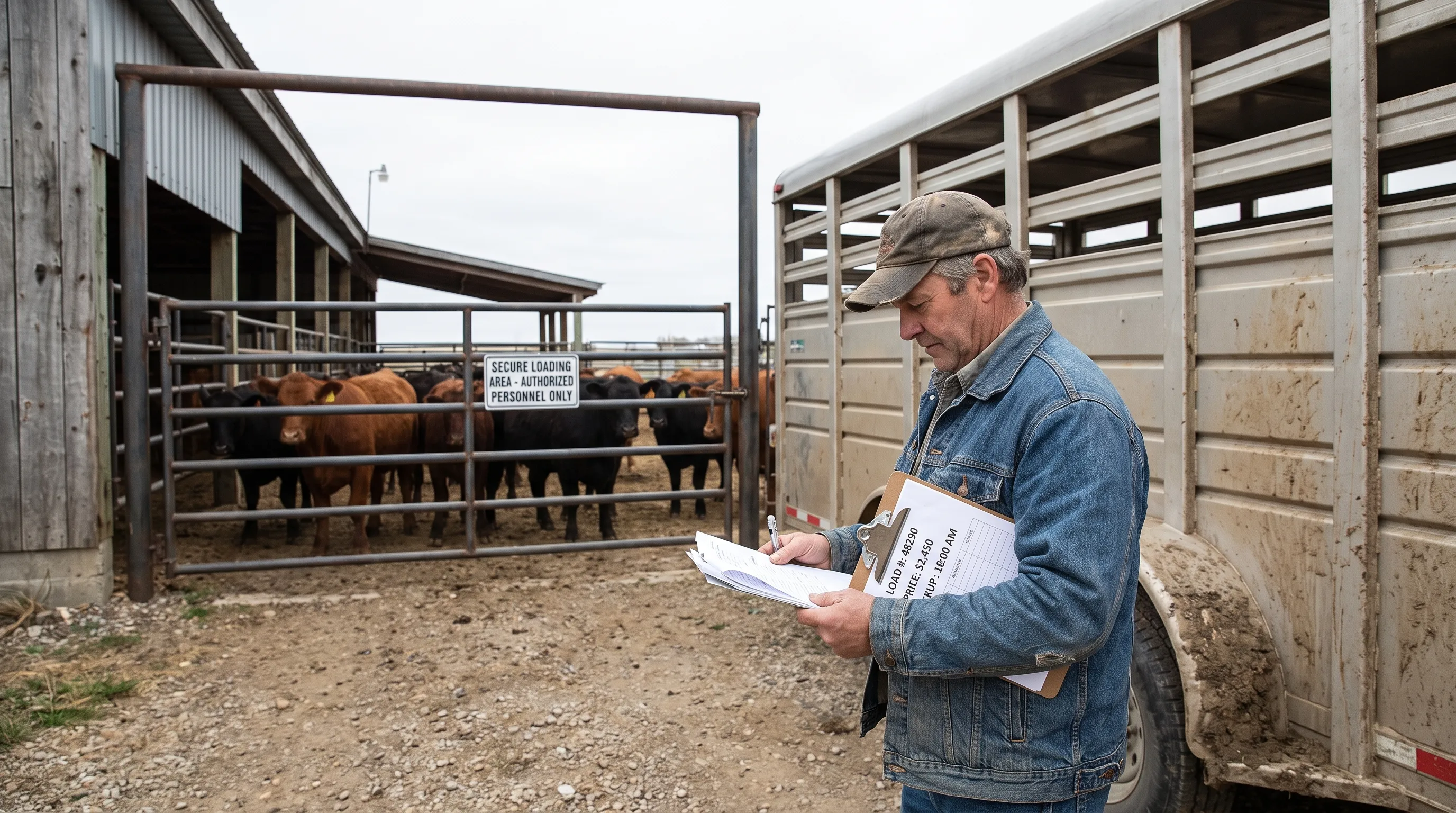
Trade on terms you can control
Some negotiations are easier when you change the job rather than argue over the same number. A wider pickup window, fewer stops or a clearer loading appointment may reduce your exposure. A return load can improve positioning, but only if it is genuinely available and suitable for your rig.
For recurring work, cutting empty miles between livestock loads can help you evaluate whether the lane supports a better quote. An unconfirmed backhaul should not be the reason you accept an otherwise unprofitable trip.
Comparing quotes also requires comparing scope. Just as someone comparing custom Uganda safari itineraries needs to check the route and included transport, a shipper comparing hauling quotes needs to check the rig, stops and included waiting time.
Keep safety and animal care outside the bargaining process. Do not offer overloaded equipment, unsuitable separation, reduced cleaning or a schedule you cannot safely and lawfully meet. If animals are already loaded when a dispute arises, prioritize their care and resolve the billing separately.
A lower load price is only a better deal for both parties when the revised job remains workable. Trading away essential handling or rushing the trip does not create a sound agreement.
Close the agreement before moving the truck
Once you reach a number, stop negotiating and confirm the booking. A verbal yes is not enough when each side may remember different conditions.
Send a short written recap covering:
Shipment and equipment: Origin, destination, livestock details, trailer requirements and agreed stops.
Schedule and payment: Pickup and delivery windows, total payment, payer, invoicing requirements and payment due date.
Exceptions: Included waiting time, any agreed detention charges, extra-stop pricing and cancellation terms.
Ask the shipper to confirm or correct the recap before you dispatch. Do not assume that sending your own terms means the other party has accepted them.
Waiting-time arrangements need particular clarity. Define when the clock starts, what evidence is needed and whether approval is required before charges accrue. A vague promise to “take care of you” is not an agreed payment term.
The agreed load price should describe a defined service. If the shipper adds a stop, changes the destination or materially changes the shipment, confirm the revised scope and payment before proceeding with the change whenever possible.
If you cannot agree, leave the relationship intact: “I can’t make this one work at that number, but keep me in mind when you have a load that fits my truck and location.”
Frequently asked questions
How much above the posted rate should I ask? There is no universal percentage. Build a quote from your trip costs, required earnings, equipment and schedule. Ask for a number you can explain, rather than adding an arbitrary markup because negotiation is expected.
Should I tell the shipper my minimum? Usually, quote what you are willing to accept for the defined job without labeling it your absolute floor. Sharing your minimum too early can make every later discussion start there, even if the scope changes.
Can I negotiate a load price after accepting the haul? Reopen the discussion when the agreed scope materially changes, not simply because you reconsidered the number. Explain the change, propose revised terms and seek agreement promptly. Do not use loaded animals as leverage in a payment dispute.
When should I walk away? Decline when the payment does not meet your minimum, the equipment does not fit, the schedule is unsafe or essential terms remain unresolved. Losing an unsuitable haul is better than accepting a commitment you cannot perform responsibly.
Start with a load that fits your truck
Negotiation is easier when the rate is visible and you can discuss the job directly with the shipper. Livestock Way offers free load browsing, upfront rates and rig-fit matching for cattle and horse loads across the Southern Plains, without a broker middleman.
Find a suitable haul, confirm its requirements and make a clear offer you can stand behind. Once the terms work, put them in writing and book the load.