Now live across the Southern Plains — Amarillo · OKC · Fort Worth, and growing lane by lane


Load Board
Plan Profitable Weeks in Owner Operator Livestock Hauling
10 minutes read
Livestock Way
A profitable week in owner operator livestock hauling starts before you accept the first load. You need enough revenue to cover the truck, compensate yourself and leave room for the delays that come with moving live animals. A strong rate on Monday does not guarantee a good week if it blocks a better Thursday load or leaves you paying for an unplanned return trip.
The practical approach is to plan the week as one business decision, then check each load against it. Start with a cash target, protect your available working time and keep a fallback for bookings that change.
Set the weekly target before booking
Your weekly revenue target should reflect your operation, not another hauler’s advertised rate. Separate costs into three groups: expenses that follow the miles, obligations that continue while the truck sits and the compensation you need from the business.
Mileage-related expenses include fuel and realistic maintenance and tire reserves. Weekly obligations may include truck and trailer payments, insurance, permits and administrative expenses. Spread monthly or annual obligations across your planned working weeks, allowing for time off and maintenance downtime.
For planning purposes, use:
Required weekly revenue = trip expenses + allocated fixed cash commitments + owner compensation target + contingency allowance.
Suppose your planned trips require $2,150 in operating expenses and reserves. Add $1,450 in allocated fixed commitments, an $1,800 owner compensation target and a $500 contingency allowance. Your weekly revenue target is $5,900.
That is a cash-planning target, not an accounting profit calculation. Owner draws, loan principal, depreciation and estimated taxes need separate treatment in your books. Do not subtract overlapping reserves and expenses twice. Our guide to how livestock hauling rates actually work explains the difference between a quoted rate and what the haul leaves you.
Compare complete weeks in owner operator livestock hauling
The highest gross revenue is not always the strongest choice. Compare complete plans, including positioning miles, return miles and the expenses needed to finish the work.
The following illustration uses assumed diesel at $3.90 per gallon, fuel economy of 6 mpg and a combined maintenance and tire reserve of $0.30 per total mile. These are example inputs, not current market benchmarks.
Weekly planning item | Plan A | Plan B |
|---|---|---|
Gross hauling revenue | $7,400 | $8,200 |
Loaded miles | 1,600 | 2,000 |
Empty miles | 400 | 800 |
Total miles | 2,000 | 2,800 |
Fuel expense | $1,300 | $1,820 |
Maintenance and tire reserve | $600 | $840 |
Other trip expenses | $250 | $390 |
Allocated fixed cash commitments | $1,450 | $1,450 |
Owner compensation target | $1,800 | $1,800 |
Cash remaining after these allocations | $2,000 | $1,900 |
Plan B bills $800 more but leaves $100 less after the listed allocations. It also requires 800 additional miles. Neither figure is after-tax profit, and you would still need to compare working hours, payment terms and operational feasibility.
In owner operator livestock hauling, a load earns its place by improving the whole week, not just increasing the invoice total. For a closer look at positioning costs, use our guide to cutting empty miles between livestock loads.
Build the calendar around workable time blocks
A mileage plan can look profitable while the calendar makes it impossible. Loading appointments, receiving hours, washouts, inspections and rest all consume time that a route estimate may leave out.
Book a dependable anchor load
An anchor load gives the week a firm starting point: a suitable trailer, confirmed pickup details, an agreed rate and a receiver that can accept the animals when you arrive.
Put the entire assignment on the calendar. Include positioning, pre-trip inspection, loading, travel, unloading and any required cleaning before the next booking. Check expected road conditions and weather along the route, not just at the origin.
Build the schedule around applicable FMCSA hours-of-service requirements. Agricultural exemptions have conditions and should not be treated as blanket permission to accept an otherwise unworkable itinerary. Confirm what applies to your specific movement.
Leave space between commitments
Across the Amarillo, Oklahoma City and Fort Worth corridor, geographic proximity alone does not make two bookings compatible. A nearby pickup can still be a poor fit if its appointment conflicts with unloading or trailer preparation.
Leave time based on your own records for that shipper, receiver and lane. A familiar operation with reliable appointments may need a different allowance from an unfamiliar facility.
A realistic calendar makes owner operator livestock hauling more predictable because it exposes conflicts before you promise the truck. Book the next load only when the preceding assignment leaves a workable handoff, not merely because the locations look close on a map.
Confirm the details that can change the week
Before accepting a load, resolve the questions that could turn a workable plan into an expensive one. An advertised rate is only part of the agreement.
Use a short confirmation checklist:
Animals and equipment: Confirm species, head count, estimated weights, trailer suitability, compartment requirements and any special handling needs.
Appointments and access: Verify pickup and delivery windows, facility contacts, access instructions and who will be available to load and receive.
Rate and extra charges: Confirm the pricing basis, payment responsibility and agreed treatment of detention, cancellation, extra stops or changed destinations.
Documents and payment: Establish required transport paperwork, invoicing instructions, payment terms and any documents needed before funds are released.
Get the material terms in writing. A phone conversation can resolve details quickly, but a written confirmation helps both parties work from the same agreement.
Never assume equipment or handling arrangements transfer unchanged between cattle and horses. Suitability comes before filling a gap in the calendar.
Reliable owner operator livestock hauling depends on confirmed details, especially when one booking determines whether you can fulfill the next. If a shipper cannot confirm a critical appointment or equipment requirement, treat that load as provisional rather than guaranteed revenue.
Decide in advance when to replan
A profitable schedule needs room to change. Weather, loading delays, equipment trouble and receiver availability can remove the margin from a plan you accepted several days earlier.
Set decision points before departure. For example, establish when a delayed pickup would make the next commitment infeasible, then contact the affected parties before that point arrives. Do not wait until a missed appointment is unavoidable.
Keep backup opportunities separate from confirmed bookings. A possible load near your destination is useful information, but it is not committed revenue. Avoid accepting incompatible assignments simply to keep both options open.
When the plan changes, compare the remaining choices using additional revenue minus additional costs, then check time and animal-care requirements. Returning empty may leave more money than chasing a distant load with uncertain appointments.
Also keep enough cash available for fuel, necessary repairs and other obligations if a payment arrives later than expected. Your contingency allowance helps absorb disruption, but it does not replace working capital.
In owner operator livestock hauling, protecting the week sometimes means declining an extra trip. No revenue target justifies exceeding safe operating limits or postponing necessary animal care. Resolve a delay with the shipper and receiver while you still have workable options.
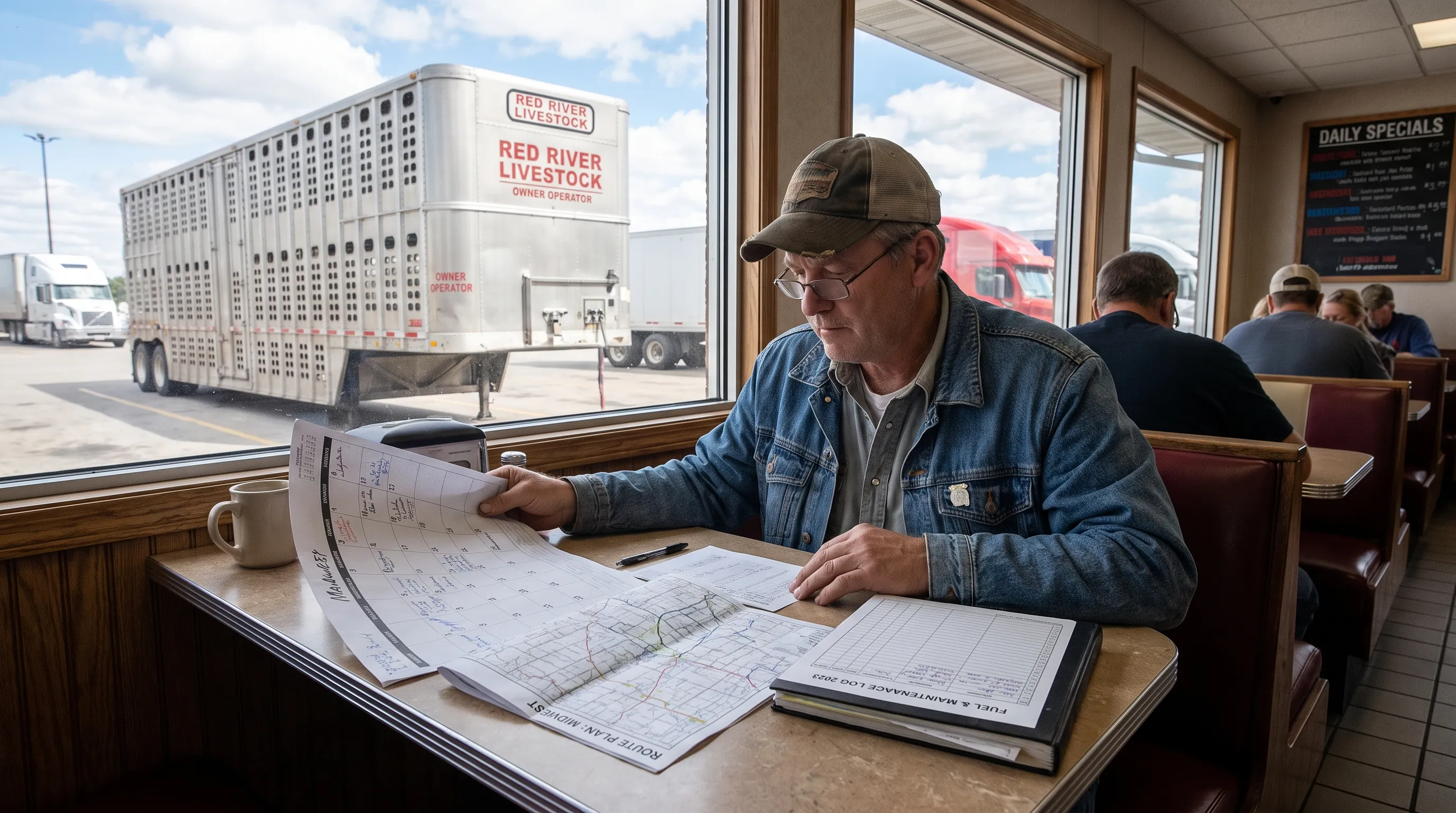
Use tools to shorten decisions, not replace judgment
A useful weekly worksheet needs only a few fields: confirmed revenue, total miles, expected trip expenses, appointment windows, available working time and payment dates. Add a status field so confirmed bookings cannot be mistaken for tentative opportunities.
Livestock Way provides upfront load rates, rig-fit matching and direct shipper contact for cattle and horse haulers. Those features can help you assemble suitable options, while its free hauling tools include shrink and rate calculators. You still need to confirm appointments and use your own cost inputs before committing.
If you use an AI assistant to summarize confirmations or draft a schedule, verify its output against the original messages. Do not let it invent appointment windows, equipment suitability or applicable operating rules.
For a hauling business commissioning a custom AI planning helper, the AI Product Adoption Deck offers product-team diagnostics and workshops focused on trust and usability. That is relevant when defining how a helper should flag missing information and explain recommendations, though it is not a livestock dispatch or compliance tool.
The best tools for owner operator livestock hauling reduce administrative work without hiding uncertainty. Keep final booking decisions with someone who understands the truck, the animals and the actual commitments.
Close the week with a short review
Set aside time after the final delivery to compare the plan with what happened. Without that review, an inaccurate fuel assumption or recurring loading delay can become part of every future quote.
Record gross revenue, loaded and empty miles, fuel purchased, trip expenses, working time and appointment delays. Reconcile these figures with invoices and receipts. Separate amounts earned from amounts collected so a good revenue week does not conceal a cash shortage.
Look at three questions: Did the week meet your cash target? Which booking used more time or money than expected? What should change before you accept similar work again?
If fuel expense repeatedly exceeds your estimate, update the planning input. If a lane consistently ties up most of a day at the receiver, include that time in future decisions. If payment regularly takes longer than agreed, account for the cash burden and address it directly with the customer.
Judge patterns over several comparable trips rather than rewriting your approach after one unusual delay. Keep notes specific enough to use: the facility, appointment, delay length and effect on the next booking.
A weekly review turns owner operator livestock hauling into a repeatable planning process. You finish with better inputs for the next schedule instead of relying on whether the week merely felt busy.
Frequently asked questions
Should I book every available day? Not necessarily. A gap can preserve time for maintenance, cleaning, rest or a better-fitting load. Compare what an additional booking leaves after its costs and what it prevents you from doing.
Should an unconfirmed return load count toward my target? No. Keep it as an opportunity, not guaranteed revenue. Check whether the confirmed outbound work remains acceptable if you must return empty or reposition elsewhere.
How much contingency should I include? Use your own delay, repair and expense history. Keep a weekly planning allowance separate from the cash reserves needed for major repairs and slow-paying invoices. There is no single amount that fits every operation.
Can a profitable week still create a cash shortage? Yes. Fuel and other bills may be due before customers pay. Review expected collection dates alongside revenue and costs, particularly before committing to several consecutive trips.
Build your next week from confirmed numbers
Start with your revenue target and available time, then compare loads that fit both. Confirm the details, protect the schedule and revisit the plan when conditions change.
You can browse livestock loads on Livestock Way for free, see upfront rates and contact shippers directly. Use those options to build a week that fits your rig and your operating limits. Profitable owner operator livestock hauling is about what the complete week leaves you, not how full the calendar looks.