Now live across the Southern Plains — Amarillo · OKC · Fort Worth, and growing lane by lane


Load Board
What Free Broker Load Boards Leave Out of the Listing
10 minutes read
Livestock Way
A pickup city, a delivery city and a rate can make a load look ready to book. But free broker load boards do not necessarily show everything a livestock hauler needs before dispatch. The missing information may determine whether the animals fit your trailer, whether someone can unload at arrival or whether extra waiting time gets paid.
Free access is useful. It is not a guarantee that a listing is complete, that the posting party controls the shipment or that every charge has been agreed. For cattle and horse haulers, the practical question is not simply whether a load pays enough. It is whether the listing gives you enough information to accept responsibility for the actual job.
What free broker load boards leave unresolved
A short listing helps you find an opportunity. A written load confirmation establishes the work you have agreed to perform. Treat those as separate steps, even when the posting includes a rate.
Some boards provide detailed fields. Others rely on the person posting to supply the information. An empty field does not automatically mean a bad load, but it does mean a question remains unanswered.
What the listing shows | What may still be missing | Why it matters |
|---|---|---|
Head count | Animal class, weight range and grouping | Determines usable capacity and separation needs |
Trailer type | Gate arrangement and facility compatibility | A general equipment label may not establish fit |
Pickup time | Whether animals and loading staff will be ready | Affects waiting time and driver scheduling |
Delivery city | Exact entrance, receiving hours and unloading contact | Affects access and successful delivery |
Posted rate | Included services, extra charges and deductions | Defines what the payment actually covers |
Contact name | Authority to approve changes | Prevents conflicting instructions |
Delivery date | Required documents and receiving conditions | Helps avoid a failed handoff |
When using free broker load boards, treat each missing operational detail as an open question, not as permission to make an assumption. A rate also needs a separate cost check, which our guide to what load rates reveal about a haul’s true profit explains in more detail.
Who can actually book and change the job?
The number on a listing may reach a broker, a shipper, a dispatcher or someone passing along another person’s request. Establish who is offering the work and who is responsible for paying you before accepting it.
Ask for the business name, a working contact number and the name of the person authorized to approve the haul. If different parties handle scheduling and payment, record both. Independently verify unfamiliar businesses rather than relying entirely on the contact details contained in a message.
Authority matters after booking, too. A ranch hand might ask you to add animals. A receiver might redirect you to another property. Neither request necessarily comes from someone authorized to change your agreement.
Before dispatch, establish who can approve changes to head count, stops, timing and compensation. Get material changes in writing before acting on them, when it is safe and practical to do so.
Listings on free broker load boards may identify a contact without explaining that person’s authority. The useful follow-up is specific: “If this load changes at pickup, who approves the revised work and rate?” Do not leave that question until the trailer is already loaded.
Head count is not a loading plan
“Forty head” tells you quantity, not whether the shipment fits your equipment or can be transported appropriately. Ask about animal type, approximate weight range, condition and any groups that require separation. Do not assume a previous load with the same count establishes capacity for this one.
For cattle, confirm whether the load involves calves, cows, bulls or mixed groups. For horses, ask about individual handling needs, separation requirements and the loading arrangements. A stated trailer preference still needs to match the actual animals and facilities.
Equipment fit includes the pickup and unloading points. Ask whether the chute or ramp works with your trailer, whether gates and approaches provide adequate clearance and whether the property has room to turn safely. Our guide to matching loads to a possum-belly, decker or stock trailer covers the equipment side of that decision.
The livestock details omitted from free broker load boards can be more consequential than a missing freight dimension. If the count or condition differs materially at pickup, pause and resolve the discrepancy rather than treating the listing as authorization to load whatever is present.
Ask who supplies required identification and health documents as well. USDA APHIS animal disease traceability guidance provides a federal starting point, but destination-state requirements and shipment-specific veterinary guidance still need checking.
A pickup window does not define waiting time
An appointment time is only useful if the animals, loading crew and facility are ready. Confirm whether the posted time is a firm appointment, a first-come window or an estimate that may move after a sale or sorting operation.
For an Amarillo-to-OKC haul, for example, “load in the morning” could mean very different arrival and delivery schedules. Ask when the animals are expected to be ready and when the receiver can actually unload. A precise pickup time does not solve a closed receiving gate.
Free broker load boards may show dates without explaining who carries the cost when those dates change. Establish any waiting-time terms before dispatch: when paid time begins, how it is measured, who approves it and what documentation is required.
Also clarify cancellation and failed-loading terms. There is a difference between a load canceled before you leave and one canceled after you have driven empty miles to the property. Any compensation needs an explicit agreement; it should not be assumed from the posted rate.
Keep a record of arrival, readiness, loading and release times. Those records support a payment discussion, but recording a delay does not by itself create an agreed right to additional pay.
The destination may be another handoff
A delivery city does not establish who receives the animals or what counts as completed delivery. Ask for the exact property, the correct entrance, an unloading contact and the receiving hours. Confirm whether a scale stop, holding facility or second destination is part of the assignment.
Free broker load boards can leave out responsibilities at these handoffs, particularly when several businesses are involved. Identify who takes custody, who signs the delivery record and who can authorize a different destination if the original receiver cannot accept the animals.
For a horse shipment connecting to air transport, confirm the cargo-facility handoff separately from any handler’s passenger travel. Establish who arranges and pays for tickets and ground transfers if those are part of the job. A handler flying separately can also check airport cabin liquid rules for the outbound and return trip before packing. Passenger baggage rules do not replace livestock cargo or veterinary requirements.
Payment terms belong beside the rate
A visible rate answers one question: what amount is being offered? It does not necessarily identify the payer, the payment deadline or the documents needed to submit an invoice.
Before accepting, confirm whether the amount covers the entire agreed haul and whether any stops or services are excluded. Ask about deductions, payment processing charges and optional expedited-payment fees where applicable. Get any promised additional compensation recorded with the conditions that trigger it.
When screening free broker load boards, distinguish a quoted rate from a complete payment agreement. “We will take care of you” is not a usable waiting-time term, and “send the paperwork afterward” does not tell you which documents the payer requires.
Record the invoice recipient, submission method, required delivery proof and agreed payment timing. If payment depends on another party’s approval, ask who that party is and what they need to approve.
Be cautious when an unfamiliar contact changes payment instructions, asks you to send money to secure a load or provides business details that do not match the booking documents. Resolve identity and payment discrepancies before committing the truck.
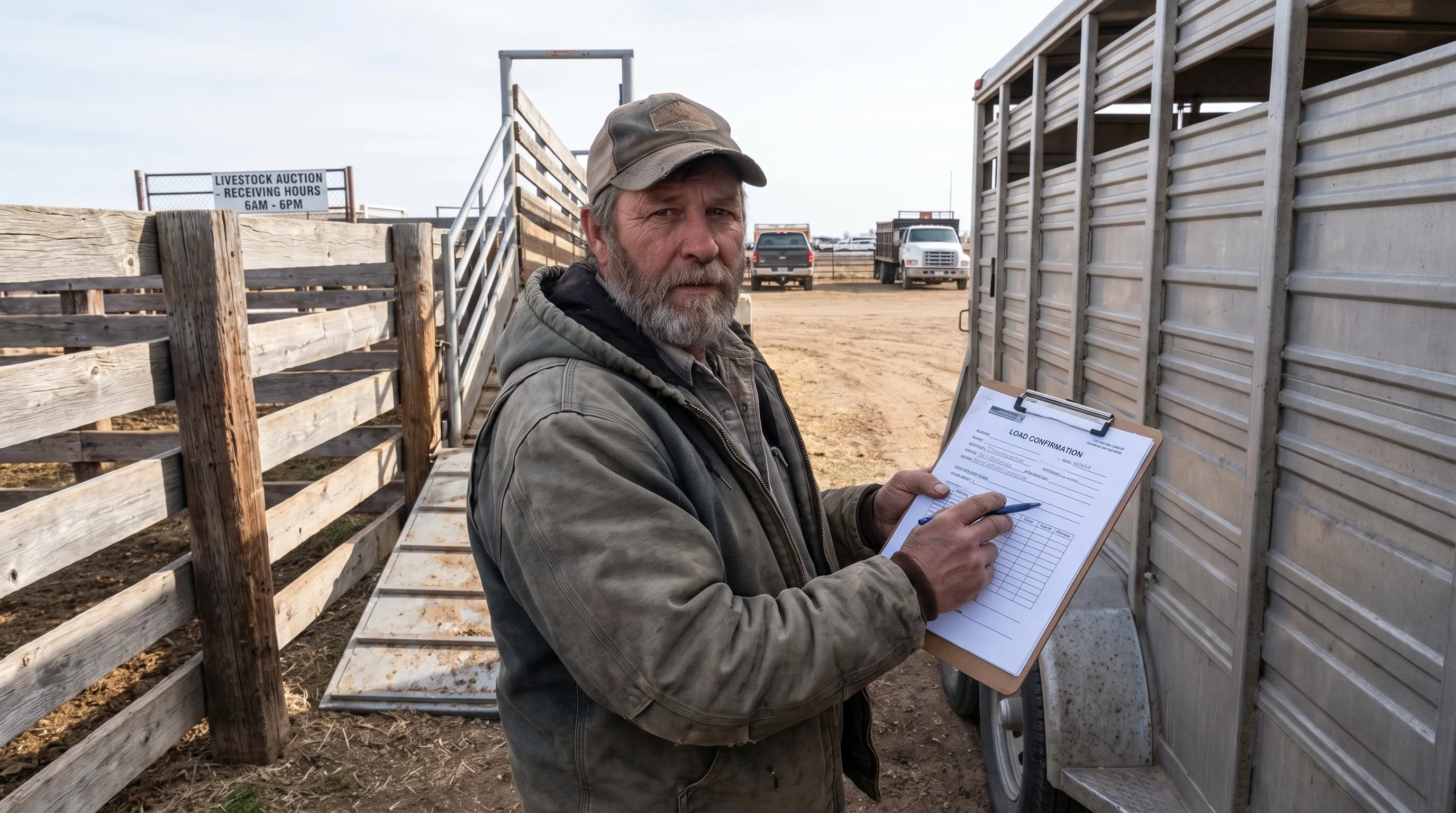
Turn unanswered questions into a written confirmation
The goal is not to make every phone call longer. It is to leave the call with an agreement that the people at pickup, delivery and payment can follow.
Use a short confirmation that captures the details most likely to change the job:
Parties: Booking business, paying business and the person authorized to approve changes.
Animals and equipment: Head count, animal class, approximate weight range, separation needs and agreed trailer requirements.
Locations and timing: Exact pickup and delivery points, appointment windows and on-site contacts.
Scope: Included stops, scale visits, loading responsibilities and unloading arrangements.
Compensation: Agreed haul amount, any additional-charge terms and cancellation conditions.
Completion and payment: Required documents, delivery signoff, invoice instructions and payment timing.
Send the summary to the authorized booking contact and request written agreement. If something conflicts with the original listing, settle the conflict before dispatch. Keep the listing, confirmation and subsequent approved changes together.
The point of using free broker load boards is to find opportunities without paying for access. Completing the agreement is still a separate task, and a short written confirmation gives you a practical way to do it.
A workable dispatch threshold is straightforward: you know what is moving, that your rig fits, where and when both facilities will receive you, who can authorize changes and how payment will work. If a core detail remains unresolved, the load is not ready for acceptance.
Frequently asked questions
Does a free load board mean there is no broker fee or margin? No. Free access describes the board’s browsing or posting cost. It does not establish how a broker is compensated or whether other fees apply to the transaction. Confirm your own agreed payment and any deductions.
Is the posted rate enough to accept a livestock load? No. You also need the animal details, equipment fit, facility arrangements, schedule and payment terms. A rate cannot resolve an unsuitable trailer or a receiver who cannot unload.
Do free broker load boards verify every listing detail? Do not assume they do. Verification practices differ by platform, and a posting can still contain incomplete or outdated information. Confirm current details with the authorized booking party.
What if the animals at pickup differ from the confirmation? Pause loading when it is safe to do so, document the discrepancy and contact the authorized party. Resolve capacity, handling, paperwork and compensation implications before proceeding.
Start with a livestock-specific listing
Livestock Way offers free load browsing, upfront rates, rig-fit matching and direct shipper contact for cattle and horse haulers across the Southern Plains, without a broker middleman. Those features help you identify suitable opportunities. Before dispatch, confirm the remaining animal, facility, timing and payment details so the job you accept matches the job waiting at the gate.