Now live across the Southern Plains — Amarillo · OKC · Fort Worth, and growing lane by lane


Load Board
Build a Cattle Network That Keeps Your Trailer Moving
10 minutes read
Livestock Way
If your trailer only moves when someone happens to call, you are not running a route, you are waiting on luck. A cattle network gives you a dependable circle of shippers, buyers, sale barns, vets, feedyards and other haulers who know what you haul, where you run and when you are available.
For livestock haulers, that network is not just a contact list. It is the difference between taking one good load and building a week that makes sense. The right people help you hear about cattle before they need to move, avoid bad-fit loads and keep your trailer earning instead of deadheading across the Plains.
Why a cattle network matters more than another random load
A strong cattle network helps you move from reactive hauling to planned hauling. Instead of checking your phone at the end of a delivery and hoping something is nearby, you can line up the next conversation before you unload.
That matters because cattle hauling is full of variables dry freight does not have. Timing, animal condition, trailer setup, loading facilities, weather, paperwork and shrink all affect whether a trip goes smoothly. When the people around the load already know and trust each other, fewer details get missed.
Random one-off loads can still be useful, especially when they pay well or put you back into a good lane. But the haulers who stay busy through slow weeks usually have repeat relationships behind them. They know who ships calves in the fall, who buys replacement heifers, which barns need help after a big sale and which ranches value a hauler who answers the phone.
Start with lanes you can actually serve well
Your cattle network should be built around lanes where you can deliver good service and still make money. A broad map looks impressive, but a tight lane with reliable contacts is usually more valuable.
For a Southern Plains hauler, that might mean focusing on the Amarillo, Oklahoma City and Fort Worth corridor. For another rig, it may be ranch to sale barn moves within a 150-mile radius. The point is to define the ground where you can show up on time, understand the facilities and price the trip without guessing.
Map your repeatable origin and destination pairs
Start by writing down where you already pick up and deliver most often. Then mark the places where you commonly reload, fuel, wash out, rest or lose time. This gives you a practical picture of where relationships will matter most.
A lane is not only a highway. It is a pattern of people and livestock movement. If you often haul cattle from cow-calf country toward a sale barn, then back toward ranches, backgrounders or feedyards, those repeated points are where your network should be strongest.
Know who creates freight in each area
Not every useful contact is the person paying the freight bill. The best contacts often hear about cattle movement before a load is posted.
Useful network contacts include ranch managers, order buyers, sale barn staff, feedyard shipping offices, veterinarians, brand inspectors, cattle buyers, horse trainers and trusted haulers who run lanes you do not. A balanced cattle network includes both direct customers and people who can point you toward the right person when cattle need to move.
Build relationships before you need the next trip
A lot of haulers only reach out when the trailer is empty. That is understandable, but it puts pressure on the conversation. Better relationships come from staying lightly connected when you are not asking for anything.
That can be as simple as letting a shipper know you will be in their area next Tuesday, sharing a clean availability window or following up after a good haul to say the cattle unloaded well. These touchpoints are small, but they remind people that you are organized and easy to work with.
Keep a simple contact record
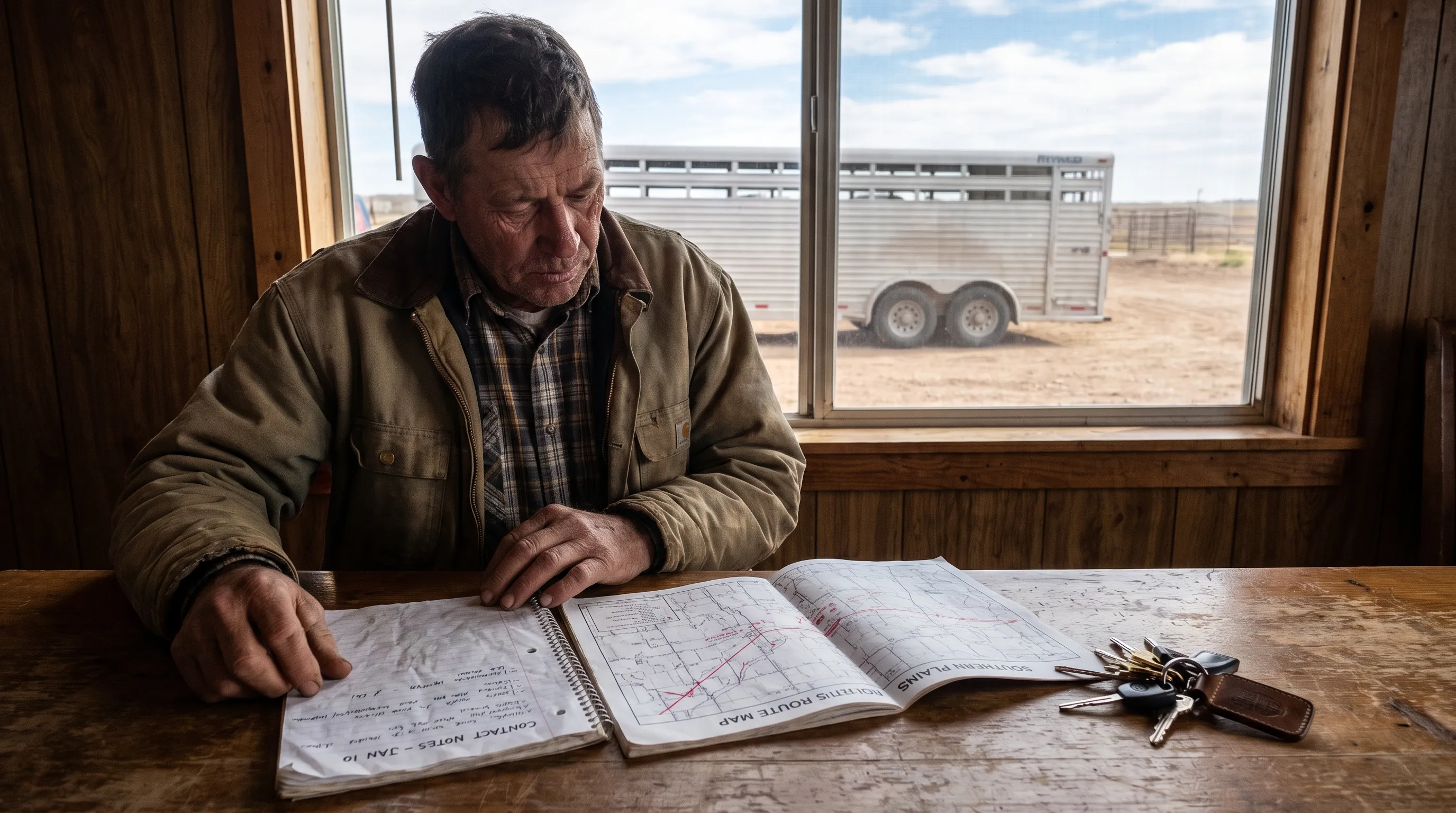
You do not need complicated software to build a useful cattle network. A notebook, spreadsheet or phone contact system works if you actually update it. The goal is to remember the details that make the next call easier.
Contact detail | Why it matters |
|---|---|
Preferred lane | Helps you call the right person at the right time |
Livestock type | Separates cattle, horses and mixed livestock opportunities |
Facility notes | Reduces surprises at pickup or unloading |
Payment preference | Helps avoid awkward terms after the fact |
Best call time | Makes you easier to reach and easier to hire |
Last load notes | Gives you context for the next conversation |
The most valuable notes are practical. Was the alley tight? Did the shipper need a pot instead of a stock trailer? Was the rate fair for the time spent loading? Did the buyer communicate well at delivery? Write those things down while the trip is fresh.
Borrow one habit from broader logistics
Livestock hauling has its own rules, but one lesson carries across the transport world: direct communication beats layers of handoffs. Even in non-livestock freight, a family-run 3PL logistics provider often wins trust by giving customers direct access to the people handling the work.
That same principle applies in cattle hauling. When shippers can speak directly with the hauler who knows the rig, the route and the handling expectations, the load is easier to plan and problems are easier to solve.
Make every load easier to say yes to
A dependable cattle network grows when people know you make decisions quickly and professionally. That does not mean saying yes to every load. It means asking the right questions, knowing your numbers and being clear about what your rig can handle.
Before you accept a load, confirm the basics: head count, class of cattle, pickup location, destination, timing, rate, loading facilities, paperwork and payment terms. If anything sounds off, slow down and clarify it before you roll.
Livestock Way has a detailed guide on what livestock transporters should confirm before pickup, which is worth using as a mental checklist when a new contact offers you a haul.
Share your rig fit clearly
Shippers do not always know your trailer as well as you do. Tell them what you can haul safely, what your trailer is not built for and what setup you need at pickup.
A possum-belly, ground-load stock trailer and decker do different jobs. A contact who understands your equipment is less likely to waste your time with the wrong load. It also protects the cattle, which is what keeps good shippers calling again.
Be clear on rate before the cattle load
Rates can be per mile, per head, per hundredweight, flat rate or built around a lane. Whatever the structure, the rate needs to make sense for all miles, time, fuel, washout, insurance, wear and empty repositioning.
If you are not sure how to think through a quote, Livestock Way breaks down how livestock hauling rates actually work without treating the posted number as pure profit.
Upfront rates also protect relationships. A shipper may not love your price every time, but they will respect a hauler who knows the cost before the gate swings shut.
Keep your cattle network active between hauls
A cattle network will go quiet if you only use it when you are stuck. Staying visible matters, especially in seasonal markets where movement can bunch up fast.
The follow-up does not need to be fancy. After delivery, send a short message that the cattle are unloaded and note anything the shipper should know. If you are headed back toward their area next week, mention it. If you handled a difficult load well, that follow-up is part of the service.
Follow up without sounding needy
Good follow-up is specific. “I will be empty near Weatherford Friday morning with a clean stock trailer” is better than “Got anything?” It gives the other person something to work with.
Avoid sending the same vague text to every contact. A strong network is built on relevance. Sale barn staff care about sale-day timing. Ranchers care about cattle handling and reliability. Buyers care about getting livestock delivered when promised.
Turn good lanes into loops
Once you know your best contacts, look for ways to connect their loads into practical loops. A good outbound haul is better when it points you toward another trusted shipper instead of an empty drive home.
This is where a cattle network and lane planning work together. If you already know which contacts are near your delivery points, you can call before you unload rather than after. For a deeper look at that math, see Livestock Way’s guide on how cattle haulers can cut empty miles between loads.
Use a livestock load board to fill the gaps
Even a strong relationship base will not cover every day. Weather changes plans, sale volume shifts and customers sometimes need lanes you do not run. A livestock-only load board can help fill those gaps without forcing you into freight that does not fit your trailer.
The key is using a board as part of your system, not as your only system. Your private contacts help create repeat freight. Public or semi-public load opportunities help you cover holes in the week, find new contacts and compare rates across lanes.
Livestock Way is built for cattle and horse haulers across the Southern Plains, with upfront load rates, rig-fit load matching and direct shipper contact. That direct connection supports the same habit your cattle network depends on: fewer layers, clearer details and faster decisions.
What to look for in a load source
The best load sources help you protect your time. For livestock haulers, that means more than seeing a destination and a phone number.
Look for loads that show the rate, identify livestock type, match your trailer, give you direct contact with the shipper and make it easy to judge whether the trip fits your lane. Free browsing can also help you understand movement in your area before you commit to a platform or a load.
Common mistakes that weaken your network
Most networking mistakes are simple, but they cost money over time. The biggest one is overpromising. If you cannot make the pickup window, do not say you can. If your trailer is not right for the cattle, pass or help the shipper find someone better suited.
Another mistake is treating every contact as a transaction. People remember haulers who communicate clearly, handle livestock calmly and fix small issues before they become big ones. They also remember the opposite.
A healthy cattle network depends on trust that compounds. One clean load can lead to another. One careless load can close a door you did not realize mattered.
Frequently Asked Questions
How long does it take to build a cattle network? You can start immediately, but useful momentum usually comes after repeated clean hauls in the same lanes. The first goal is not hundreds of contacts. It is a short list of reliable people who remember your name and know what you haul.
Do new livestock haulers need a network before taking loads? No, but they need to build one from the first load. Save contact details, follow up professionally and track which shippers communicate well. A load board can help new haulers find opportunities while relationships develop.
What is the best way to ask for repeat cattle loads? Be specific about your availability, location, trailer type and preferred lane. A short message with clear timing works better than a general request. Make it easy for the shipper to picture where you fit.
Can other haulers be part of my network? Yes. Good haulers can refer loads they cannot cover, warn you about problem situations and help shippers find the right equipment. The relationship should be reciprocal, not one-sided.
Keep your next load from being a cold start
The haulers who stay moving do not rely on one source of freight. They combine direct relationships, careful lane planning, clear rates and tools that surface livestock loads that fit their rig.
If you want to strengthen your cattle network across the Southern Plains, start with the next load. Save the contact, confirm the details, communicate well and look for the next logical connection before you are empty. When you need more visibility into cattle and horse loads with upfront rates and direct shipper contact, Livestock Way can help you keep the trailer pointed toward work instead of waiting on a call.