Now live across the Southern Plains — Amarillo · OKC · Fort Worth, and growing lane by lane


Load Board
How Free Load Boards With Rates Make Comparisons Easier
10 minutes read
Livestock Ways
A posted rate gives you a starting point, not a complete comparison. For livestock haulers, free load boards with rates are most useful when they let you put several offers side by side before calling a shipper. You can see which loads deserve a closer look without first chasing a price for every listing.
The challenge is making those prices comparable. A larger total payment may involve more empty miles, a tighter delivery window or different payment terms. A useful comparison separates what the listing tells you from what still needs confirmation, then evaluates each load on the same basis.
Separate the posted price from the terms behind it
Before comparing dollar amounts, identify what each number represents. A total load payment, a per-loaded-mile rate and a per-head rate are different measurements. They cannot be ranked fairly until you convert them to a common basis.
Also distinguish an offered rate from a market estimate. An offered rate describes a particular opportunity, subject to confirmation. A benchmark describes a broader market reference and may not reflect your equipment, lane or livestock requirements.
For each listing, establish whether the amount includes fuel compensation and whether additional services or waiting time are addressed separately. If the listing does not say, mark the answer as unknown rather than assuming everything is included.
This keeps a precise-looking number from creating false confidence. Rate visibility improves the starting information, but the scope of the offer still matters.
How free load boards with rates support a fair comparison
The practical advantage is a shared starting point: you can record the same fields for several loads and identify differences immediately. Use one comparison sheet rather than relying on memory or switching between listings.
At minimum, record the total offered payment, loaded miles, empty miles to pickup, equipment requirements and pickup and delivery windows. Keep the original rate basis alongside your calculations so you can trace each figure back to the listing.
For mileage comparisons, use the same routing method for every candidate. Mixing straight-line estimates with truck-route mileage can make one offer look better simply because its distance was measured differently.
Example: three offers with different mileage
Suppose three loads fit your trailer and appear workable on your schedule. The figures below are hypothetical teaching examples, not current Southern Plains rates. Empty miles cover travel from your current location to pickup; they do not include repositioning after delivery.
When evaluating free load boards with rates, a shared calculation makes the difference between headline pay and mileage-adjusted pay visible:
Comparison field | Load A | Load B | Load C |
|---|---|---|---|
Offered total payment | $1,440 | $1,600 | $1,320 |
Loaded miles | 300 | 400 | 300 |
Empty miles to pickup | 60 | 100 | 20 |
Miles through delivery | 360 | 500 | 320 |
Gross payment per mile through delivery | $4.00 | $3.20 | $4.13 |
Load B has the largest payment, while Load C has the highest gross payment per mile through delivery. Neither observation establishes which load is best. The calculation excludes operating costs, waiting time and travel after unloading.
Its purpose is narrower: preventing you from comparing one load’s total payment against another load’s loaded-mile rate. For the next step, Livestock Way’s explanation of what load rates reveal about a haul’s true profit covers the broader trip economics.
Make livestock suitability a requirement, not a score
Equipment and animal-care requirements belong ahead of price ranking. A load that does not fit your trailer, safe capacity or workable schedule should not remain a candidate simply because it pays more.
For cattle, confirm the head count, estimated weights, cattle class and trailer requirements. For horses, establish the number of animals, space and separation needs and any handling requirements. Verify loading and unloading access for either type of haul.
The value of free load boards with rates depends partly on whether the listings provide enough detail to identify these differences. A visible price cannot compensate for an unclear description of the work.
The same principle applies outside livestock. A general-freight shipper using custom corrugated packaging needs to specify the packed dimensions rather than merely name the goods. For livestock, the relevant specifications are the animals, suitable equipment and handling conditions.
Keep suitability separate from your financial comparison. Mark each load as compatible, incompatible or awaiting confirmation. Only compare the economics of compatible loads. This prevents a high-paying but unsuitable offer from distorting the decision and keeps unresolved animal-care questions from becoming afterthoughts.
Make missing information visible
A detailed listing can appear less attractive than a vague one because its constraints are visible. The vague listing may have the same constraints; you simply have not discovered them yet.
Avoid rewarding missing information. Use three clear labels in your comparison notes:
Listed: The information appears in the posting but has not been independently confirmed.
Confirmed: The shipper has verified the information for the proposed booking.
Unknown: The information is missing, ambiguous or awaiting an answer.
Apply those labels to payment timing, appointment windows, loading access and responsibility for additional charges. If a listing says “flexible pickup,” ask what actual dates and hours are available. If it says “quick pay,” ask for the payment deadline and any associated fee.
Used this way, free load boards with rates help you compare both the offer and the quality of the information supporting it. Two identical prices are not equally decision-ready when one has confirmed terms and the other still has several unknowns.
Do not turn uncertainty into an invented cost or an automatic rejection. Identify the question that needs answering, then decide whether the opportunity warrants a call.
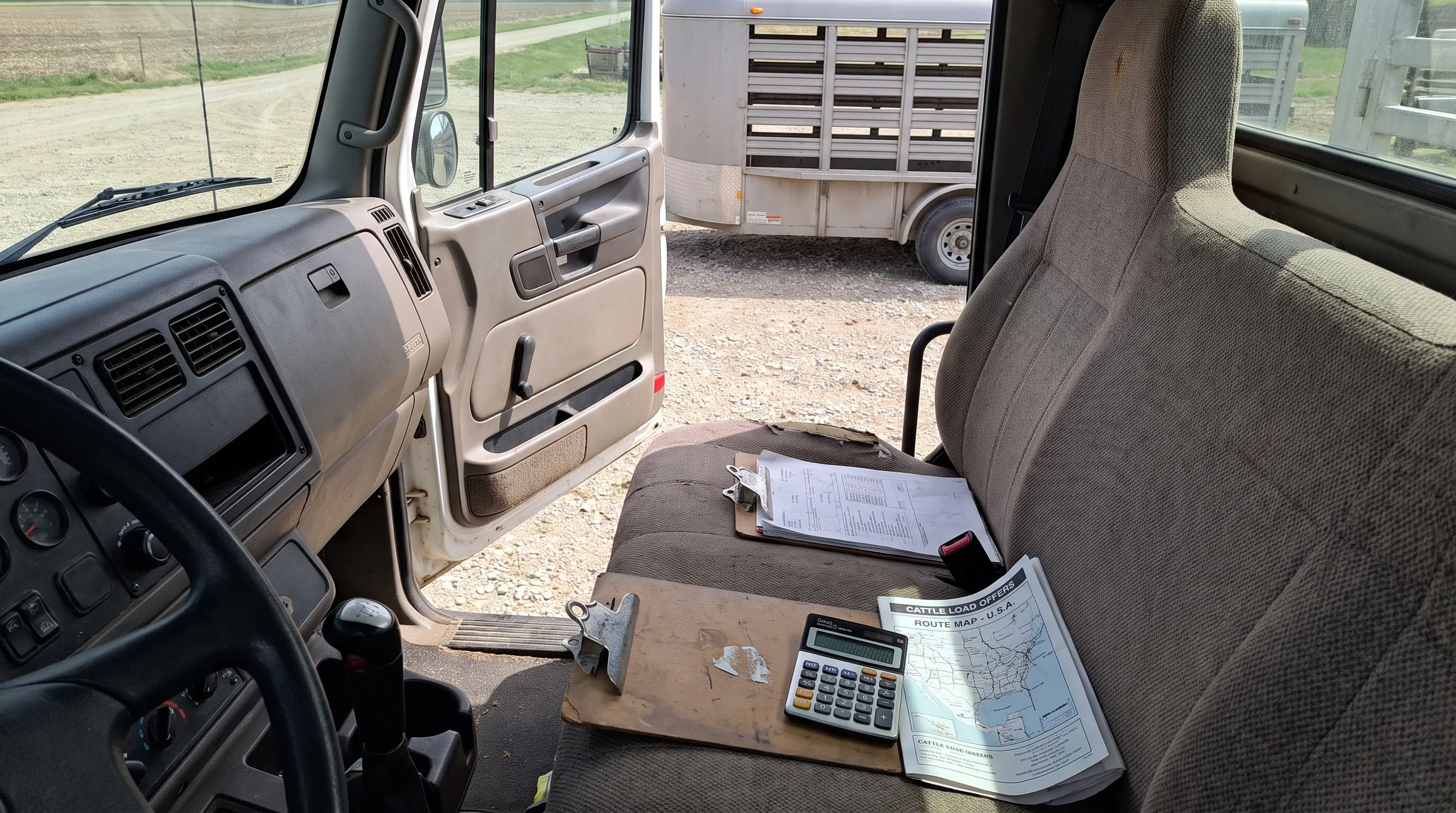
Compare written offers, not just initial listings
A comparison sheet should change as you learn more. The posted amount might remain the same while the confirmed head count, pickup location or appointment window changes. Those revisions can alter which load fits your operation.
After speaking with a shipper, update the same fields for every remaining candidate. Record when the information was confirmed and who supplied it. Do not compare a fully clarified offer against another listing’s unverified assumptions without making that difference visible.
The strongest use of free load boards with rates is to build a shortlist, then replace preliminary information with confirmed booking terms. Before committing, get the agreed payment, service scope, locations, schedule and payment terms in writing. Clarify how changes will be handled, including changes to head count when compensation is calculated per head.
Visible pricing does not verify the other party or guarantee payment. Livestock Way’s guide to vetting free livestock load boards before booking provides a separate framework for checking the platform and the individual booking.
Keep that verification step distinct from rate comparison. An attractive offer still needs a legitimate counterparty and clear terms.
Use a decision order that fits your operation
Once the information is comparable, choose according to your actual constraints. If you need to be near Fort Worth the following morning, destination and schedule may matter more than a modest difference in gross pay. If your available hours are limited, a distant pickup may eliminate an otherwise appealing load.
A practical order is to check equipment and livestock suitability first, schedule feasibility second and financial fit third. Then examine unresolved terms before making a commitment. This is not a universal scoring formula; it is a way to avoid letting the largest number dominate every other consideration.
Comparing free load boards with rates also requires checking what “free” covers. Free browsing does not necessarily establish whether posting, contact access or other services carry charges. Check the platform’s stated terms rather than assuming all boards use the same model.
Finally, evaluate each offer on its confirmed work. A possible return load can be useful context, but an unbooked backhaul should not be treated as guaranteed revenue when deciding whether the current haul works.
Frequently asked questions
Does a posted rate mean the load is ready to book? No. Confirm availability, equipment fit, livestock details and scheduling with the shipper. The posting gives you information to evaluate, not proof that every booking condition has been settled.
Should I choose the highest-paying listing? Not automatically. Compare the same rate basis, account for empty miles and check the work involved. A higher total payment can require substantially more travel or a schedule that does not fit your operation.
Can I compare cattle and horse loads using the same worksheet? Yes, for shared fields such as payment, mileage and appointments. Keep species-specific equipment, capacity and handling requirements separate. Similar mileage does not make the two jobs operationally interchangeable.
Are general freight boards suitable for finding livestock loads? Check the actual listings and equipment categories rather than assuming they are. A box-truck or dry-van listing is not a substitute for a livestock-compatible load with appropriate animal and trailer details.
Put the comparison method to work
The benefit of free load boards with rates is not that they choose a load for you. They make the starting information visible so you can compare offers consistently and focus your questions.
Browse livestock loads on Livestock Way, which offers upfront rates, rig-fit matching and direct shipper contact for cattle and horse haulers across the Southern Plains. Browsing and load posting are free, with no broker middleman. Start with compatible loads, compare them on the same basis and confirm the terms before committing.