Now live across the Southern Plains — Amarillo · OKC · Fort Worth, and growing lane by lane


Load Board
How to Screen Load Board Freight for Livestock Compatibility
10 minutes read
Livestock Ways
Screening load board freight for livestock compatibility means checking more than the lane and advertised rate. A load can fit your route yet fail on animal condition, trailer configuration, loading access or the time available to complete the trip safely.
Accept only after the animals, equipment, facilities, schedule and paperwork all check out. Missing information means pause and verify, not assume the load will work. A confirmed mismatch means decline, even when the rate looks attractive.
Start with a stop-or-confirm screen
Before negotiating, establish what is moving and what the job requires. A listing that says “cattle, full load” or “horses, trailer needed” is not enough to dispatch a truck.
Screening item | What you need to confirm | Reason to pause or decline |
|---|---|---|
Animals | Species, class, head count, weight range and condition | Unknown weights, unsuitable animals or incompatible groups |
Equipment | Trailer type, usable space, partitions, flooring and ventilation | A requirement your actual rig cannot meet |
Facilities | Loading method, approach, clearance and unloading arrangements | Unsafe access or an incompatible loading setup |
Timing | Ready time, appointment, receiving hours and contingency plan | A trip that depends on speeding or skipping needed stops |
Documentation | Applicable health, identification and movement records | Required records unavailable before departure |
Commercial terms | Responsible shipper, total rate and extra-charge agreements | Unclear authority, payment responsibility or scope |
For load board freight, separate an unanswered question from a definite failure. An unknown chute height calls for a measurement or photos. A confirmed height mismatch calls for different equipment or a different load.
Also verify who can authorize the shipment. Confirm the booking with the named pickup facility through independently verified contact information when anything about the listing seems inconsistent.
Match load board freight to the animals and trailer
Identify the animals beyond species and head count
“Twenty head” does not establish either legal payload or a safe stocking plan. Ask for the class of cattle or horses, estimated individual weight range, total estimated live weight and any animals requiring separation.
For cattle, clarify whether the shipment includes calves, mature cows, bulls or mixed classes. For horses, ask about size, handling experience, stallions, mares with foals and whether animals are familiar with one another. Do not assume unfamiliar animals can share a compartment safely.
Ask whether any animal is injured, ill, unusually fatigued or having difficulty standing or walking. Nonambulatory or severely distressed animals should not be treated as ordinary board freight. Stop the routine booking process and obtain veterinary direction rather than trying to solve the problem with a lower rate or a different compartment.
The shipper should provide accurate information, but the driver still needs a pickup inspection and authority to refuse loading when conditions differ materially from the booking.
Check usable capacity, not the trailer label
A trailer described as a “stock trailer” is not automatically suitable for every species, size or handling situation. Screen load board freight against the configuration you will actually bring, including gates, partitions, interior clearance, floor condition and loading openings.
Check both weight and space. Remaining legal payload depends on the actual truck-and-trailer weight, equipment ratings and applicable gross and axle limits. Animal placement also affects axle loading. A shipment can be below a gross-weight limit and still be unsuitable because of crowding, poor distribution or inadequate separation.
Use species-appropriate transport guidance and qualified advice for space allowances. There is no reliable universal head-count formula for every trailer, animal class and weather condition.
Confirm traction, ventilation, secure closures and the absence of protrusions or damaged surfaces. If the trailer previously carried other cargo, inspect for residues, loose materials and anything that could injure animals or contaminate the transport environment.
Verify both ends of the loading operation
A compatible trailer can still be the wrong rig for a property. When screening load board freight, get specific answers about pickup and delivery rather than accepting “trucks come here all the time.”
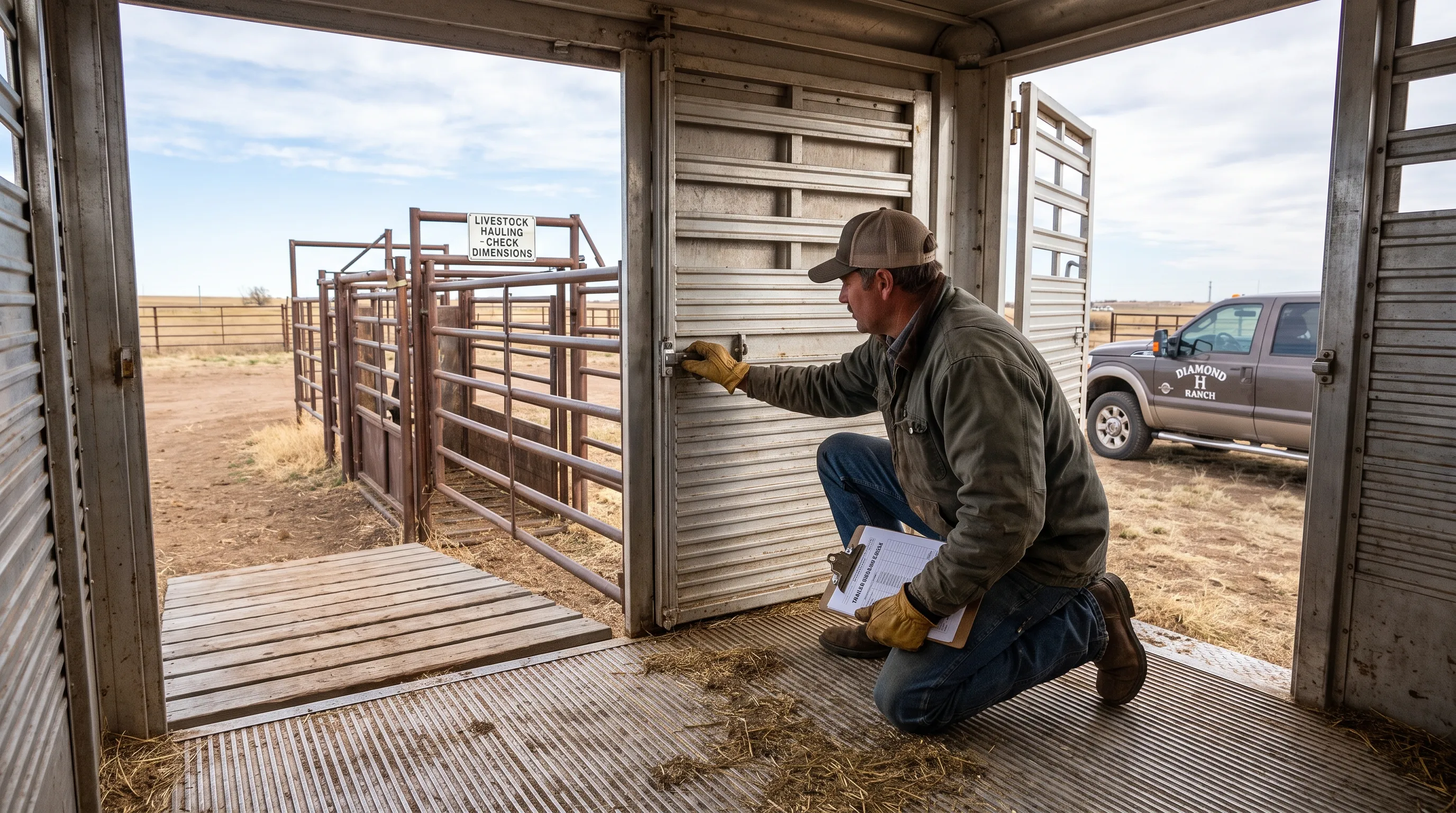
Ask how animals enter and leave the trailer, whether a chute or ramp is available and whether its dimensions match your loading opening. Confirm turning space, overhead clearance, road condition and whether the site remains accessible after rain.
Photos can resolve questions about gates, approaches and loading interfaces, but they should show the actual facility. An old image from another entrance does not confirm today’s conditions.
Establish who provides handlers and who controls gates during loading. If the arrangement expects the driver to work animals alone, that is a material job requirement, not an incidental detail.
Finally, verify the receiver’s hours and an after-hours contact. “Deliver anytime” needs a named person, an accessible unloading area and a clear plan if arrival slips. Do not depart with live animals based on an assumption that someone will answer the phone later.
Test the route and schedule against real conditions
Build the trip from the time you leave your current location, not just the loaded miles shown in the listing. Include travel to pickup, loading, inspections, fuel, delivery and any cleaning or repositioning afterward.
Check applicable hours-of-service requirements against your remaining available time. Loading and other work can affect the duty clock even when the truck is stationary. Animal-care obligations need their own planning; a legal driving schedule alone does not establish a suitable livestock journey.
A workable load board freight schedule also needs room for predictable trouble: auction congestion, slow loading, road closures, heat, freezing conditions or a receiver running late. Identify safe alternatives before departure, especially when a delay could leave loaded animals waiting without suitable care.
Do not use a single weather reading at pickup to judge the entire trip. Consider conditions along the route and at the expected unloading time, then discuss any necessary changes with the shipper.
Include the driver’s handling capacity
Confirm that the physical work is within your capability that day. Climbing, operating partitions and managing gates may be part of the booking even when the listing describes only transportation.
If persistent back or neck pain affects driving or handling, seek assessment from a qualified clinician before committing. Move Well MD’s musculoskeletal care services are one example of clinical support for those concerns, not a substitute for adequate rest or a safe handling arrangement.
Decline a schedule that depends on working through a physical limitation or arriving too fatigued to unload safely.
Resolve movement records and cleaning requirements
Before accepting interstate load board freight, identify which animal-health and movement requirements apply to that specific shipment. Requirements can vary by species, animal class, origin, destination and purpose of movement.
Depending on the trip, documentation may include a certificate of veterinary inspection, official identification, an entry permit or equine infectious anemia test records. These are not universal requirements for every load. Check the destination state animal-health authority and relevant USDA APHIS guidance rather than relying on the paperwork used for a previous shipment.
Confirm who obtains the records, when they will be ready and how they will accompany the animals. Match the records to the actual shipment before departure. If the count, destination or animal identity changes, resolve the discrepancy rather than assuming the original documents still cover the move.
Ask about previous trailer use, required cleaning, bedding and any site-specific biosecurity rules. Cleaning may require facility access, drying time and disposal arrangements, not just a quick stop with a hose.
This is especially important when arranging a return trip. A geographically convenient load may still be a poor fit if it conflicts with cleaning requirements or the next pickup window. Apply the same discipline when screening livestock backhauls.
Price the complete job after compatibility is confirmed
A visible rate helps you decide whether a call is worthwhile, but it does not prove the load works economically. Once the safety and equipment checks pass, evaluate load board freight using all miles, expected work time and trip-specific expenses.
Include deadhead to pickup, necessary washout travel and realistic repositioning after delivery. Account for fuel, tolls, cleaning, bedding, labor and other costs that apply to your operation. Do not confuse gross revenue per mile with profit.
Clarify whether the price is a flat load rate, mileage-based or calculated another way. Put detention, cancellation, extra stops and material changes to the shipment in writing. Also identify who can approve an adjustment if the actual head count or weight differs from the booking.
Understanding what an upfront load rate does and does not tell you helps keep the discussion focused. The relevant question is whether the agreed payment covers the complete, verified job, not whether the listing shows an appealing number.
Work through a conditional booking example
Consider a hypothetical cattle shipment paying $1,800 for 500 loaded miles. The advertised figure works out to $3.60 per loaded mile.
Your actual plan requires 80 empty miles to pickup and another 70 miles for cleaning and repositioning afterward. At 650 total miles, gross revenue is about $2.77 per mile before expenses. Neither figure is a recommended market rate; the example shows why the mileage basis matters.
The load board freight still needs a compatibility decision. Suppose the listing has no weight range, the pickup uses a loading chute you have not visited and the receiver closes shortly after your estimated arrival.
That load is on hold, not accepted. Request weights and loading measurements, then verify the receiving window. If the answers establish legal payload, suitable animal space, compatible access and a workable arrival, move to written terms. If they do not, decline or agree on a genuinely workable change.
A higher rate does not fix an unsafe loading interface or an impossible delivery window.
Send a confirmation that leaves little room for assumptions
Before dispatch, collect the agreed facts in one written message. A useful confirmation might read:
Confirming species/class, head count, estimated weight range and total weight; trailer configuration and separation needs; pickup and delivery addresses, contacts and appointment windows; loading and unloading arrangements; required records and cleaning instructions; total rate, payment responsibility and agreed extra charges. Acceptance remains subject to conditions matching the description and animals being suitable for transport at pickup.
Add the actual details rather than leaving categories blank. Ask the responsible shipper to confirm the message and identify who can authorize changes.
For load board freight, this written record should accompany, not replace, the pickup inspection. If the animals, facilities or instructions differ, stop and resolve the change before loading. Keep enough time in the plan to make that decision without pressure to rush.
Frequently asked questions
Can a general freight board have suitable livestock loads? Yes, but the listing still needs species, equipment, handling, timing and documentation checks. A livestock label does not establish compatibility, and a generic trailer category may hide important differences.
Does a legal load weight mean the animals will fit safely? No. Legal weight is only one constraint. Usable floor space, animal size, separation, ventilation and placement also matter. Use the most restrictive applicable equipment, legal or animal-care limit rather than choosing whichever allows the most head.
What should I do when the shipper cannot provide exact weights? Ask how the estimate was developed and request a credible weight range. Assess the heavier plausible case, not just the average. If uncertainty prevents you from establishing a legal and suitable loading plan, do not commit until it is resolved.
Should I accept first and sort out paperwork at pickup? No. Establish the applicable requirements and who will supply the records before dispatch, then verify them before departure. Discovering a missing requirement with animals already loaded creates avoidable pressure and delay.
Find a load, then verify the fit
Livestock Way helps you narrow load board freight options with upfront rates, rig-fit matching and direct shipper contact for cattle and horse loads across the Southern Plains. Those features support screening, but the final decision still depends on the shipment’s verified details.
Browse livestock loads on Livestock Way, then use the checks above before committing your truck. A suitable load needs more than a matching lane: it needs a workable plan from pickup through unloading.