Now live across the Southern Plains — Amarillo · OKC · Fort Worth, and growing lane by lane


Load Board
Questions to Ask Load Board Companies Before Signing Up
10 minutes read
Livestock Way
Before you sign up with load board companies, ask for evidence that the platform can help you find workable cattle or horse loads, not just a count of registered users. A useful board should let you assess lane activity, equipment fit and the terms that affect what you actually earn.
For a hauler working the Amarillo, Oklahoma City and Fort Worth corridor, a large nationwide inventory means little if nearby listings are stale or unsuitable for the trailer. The questions below are designed for a sales call, a free-account review or a subscription trial. Ask the company to show you the answer on a real listing or in its written terms whenever possible. A sales promise is not a substitute for either.
Questions load board companies should answer about loads and costs
1. Can you show recent loads in the lanes I actually run?
Ask to see recent listings with pickup areas, destinations and hauling dates. Specify your operating area rather than asking whether the platform has “loads in Texas.” A load several hundred miles away may offer no practical value once you account for repositioning.
Useful follow-up questions include how the company handles expired postings, whether booked loads are removed and how you can tell when a listing was last updated. Ask whether its advertised inventory includes historical loads or only available opportunities.
The evidence to request: A sample of current listings that fit your lanes and schedule, with enough detail to confirm availability directly with the shipper.
When load board companies advertise a large network, ask how much of that activity is relevant to your operation. Neither total membership nor national coverage proves local usefulness.
2. What will I pay, and what does that payment unlock?
Request the full pricing terms before entering billing information. If there is a subscription, clarify the billing interval, minimum commitment and whether the advertised price is introductory. Ask whether additional users, contact access or other functions cost extra.
If browsing or posting is free, establish what that includes. Free access should not be confused with a guarantee of free optional services, guaranteed bookings or payment protection. Get the boundaries in writing rather than assuming them.
Evaluate any fee against realistic use. A subscription that looks inexpensive can still be poor value if you rarely find suitable work. Conversely, a platform with relevant loads may justify its cost if it helps you secure profitable trips.
The evidence to request: A written breakdown of required charges, optional charges and the conditions under which each applies. Ask whether any fee is deducted from the hauling rate rather than billed separately.
3. Can I see the rate before contacting the shipper?
Ask whether every listing shows a rate and what that number represents. It might be a total trip amount, a per-mile figure or another pricing basis. You need to know which before comparing opportunities.
A posted rate also leaves questions about waiting time, extra stops, cancellations and changed shipment details. Ask whether the board lets you review those terms or whether you must confirm them with the shipper.
The benefit of a load board with visible rates is faster screening, not automatic profitability. Include empty miles, fuel, labor and job-specific expenses in your own calculation.
Ask load board companies to demonstrate rate visibility on an actual listing rather than describing it as a general feature. You should be able to understand the pricing basis without first making several calls.
4. How do you determine whether a load fits my rig?
“Livestock loads” is too broad a category to establish equipment fit. Ask what information the platform uses to match cattle or horse shipments with trailers and whether the listing describes the animals well enough for further assessment.
Depending on the shipment, relevant details may include head count, estimated weights, animal class, trailer configuration and loading access. Horse transport may require different separation and handling arrangements from cattle hauling.
Ask what happens when a listing lacks essential details. Does the platform identify the gap, or must you discover it after contacting the shipper?
The evidence to request: A demonstration using your actual equipment profile. Rig-fit matching should narrow the search, but it cannot replace your judgment about safe loading, capacity or animal compatibility.
The better load board companies explain what their matching checks cover and what remains your responsibility.
Clarify booking, payment and livestock responsibilities
5. Who am I dealing with, and who owes me payment?
Establish whether the platform introduces you directly to the shipper, involves a broker or participates in the transaction another way. Then ask who agrees to the hauling terms, who receives your invoice and who is responsible for paying it.
Direct shipper contact can simplify communication, but it does not by itself establish the shipper’s creditworthiness or guarantee payment. Likewise, a platform displaying a rate does not necessarily become a party to the hauling agreement.
Before accepting work, confirm the legal name of the paying party, payment timing, required documentation and the process for disputing a deduction. If the company advertises payment protection, request the eligibility rules, exclusions and claims process.
The evidence to request: Written terms explaining the platform’s role and any payment service it actually provides. Keep those separate from the rate agreement you make for an individual haul.
6. What livestock-specific details can I confirm before accepting?
Ask load board companies which shipment details are visible before booking and which require a conversation with the shipper. A livestock listing needs more than an origin, destination and dollar amount to support an informed decision.
You need a way to confirm pickup timing, loading facilities, animal condition and destination access. Depending on the animals and route, identification, health documentation or movement requirements may also apply. Confirm those requirements with the appropriate authorities and responsible parties rather than relying on a listing alone.
Ask who provides missing paperwork and who communicates changes before departure. A matching system cannot resolve an unsuitable loading facility or make an animal fit to travel.
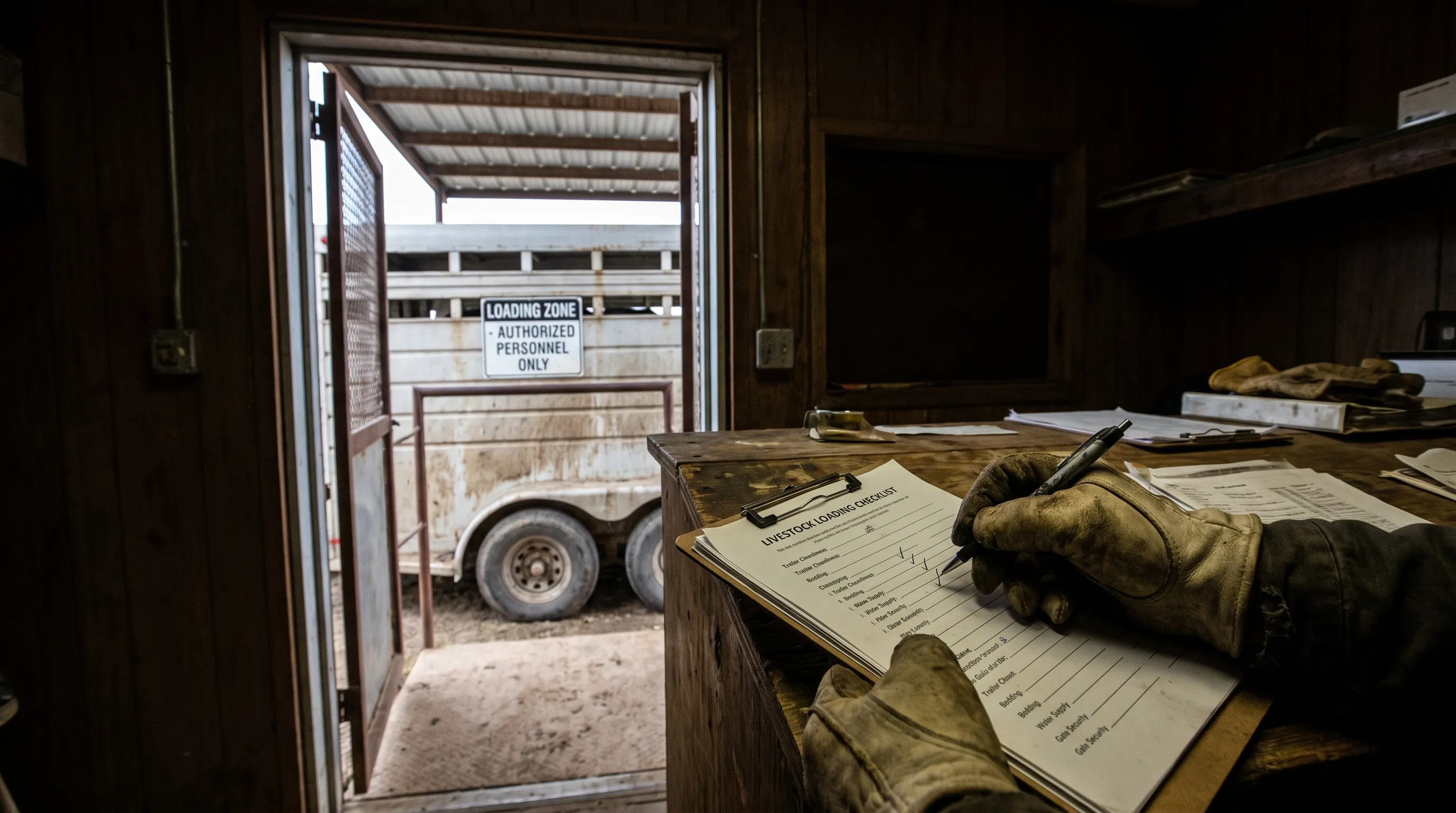
Use a separate livestock transport pre-pickup checklist after finding a promising load. Evaluating the board and verifying a particular shipment are different tasks, and both matter.
7. What happens when a posting is wrong or a problem occurs after hours?
Support matters most when the information you relied on changes. Ask how to report an unavailable load, incorrect shipment details or suspicious contact information. Find out whether support is human, what hours it operates and which issues it can address.
A support line is not the same as a booking guarantee, a dispute-resolution service or emergency assistance. Ask the company to explain the limits of its role, especially when animals are already in transit.
The evidence to request: A clear contact method and an explanation of how reports are handled. During your evaluation, send a straightforward question and assess whether the response answers it.
Reliable load board companies distinguish platform support from responsibilities that remain with the hauler and shipper.
Verify the business and the signup terms
8. What evidence supports your claims, and what does verification mean?
Ask for the company’s legal business name, written terms and a working support contact. If it promotes testimonials or success stories, look for enough context to judge relevance: operating area, equipment type and the service the customer actually used.
Vendor screening is not unique to trucking. SEO Bridge’s questions to ask an SEO consultant emphasize clear goals, transparent budgets and evidence of past performance. Apply that same buying discipline here: request proof of useful lane activity rather than accepting a promise that signup will grow your business.
Also ask what “verified” means on the platform. It could refer to contact information, business identity or other checks. Those are not interchangeable.
Where a carrier or broker is involved, FMCSA’s SAFER Company Snapshot provides company-identification and safety information. Confirm relevant operating authority and insurance separately when applicable. A listing platform does not necessarily need the same credentials as a carrier or broker; its actual role matters.
Ask load board companies to define each verification claim, including what it does not guarantee.
9. How do renewal, cancellation and data use work?
Before starting a paid trial, establish when billing begins and whether renewal is automatic. Ask how to cancel, whether cancellation takes effect immediately or at the end of the billing period and whether any refund policy applies.
Do not assume that deleting an app cancels a subscription. Follow the written cancellation procedure and retain confirmation. For a free account, ask how to close it and stop unwanted messages.
Data questions matter too. Find out which profile details are public, who can access your contact information and whether marketing permissions are separate from account communications. Review the privacy policy before uploading business or shipment information.
The evidence to request: The applicable renewal, cancellation and privacy terms, plus a clear route for account closure. If the company cannot explain those terms before signup, resolve that uncertainty before committing money or sensitive information.
Run a small test before committing
Evaluate the service against a normal working week, not an unusually attractive example chosen for a demonstration. Use your actual trailer, operating area and availability. Record whether you can find suitable loads, understand the rate and reach the right person.
When testing load board companies, measure usable opportunities rather than raw listing volume. A load only becomes a serious prospect after its availability, equipment fit and essential terms are confirmed.
Test | Evidence to look for | Reason to pause |
|---|---|---|
Lane relevance | Recent loads within your workable operating area | Mostly distant or outdated postings |
Pricing clarity | Visible pricing basis and written platform charges | Fees or rate details remain unclear |
Rig fit | Shipment details suitable for an equipment check | Broad livestock labels with little detail |
Contact and payment | Identifiable contact and paying party | Nobody clearly accepts payment responsibility |
Support and account terms | Clear help, renewal and cancellation procedures | Sales assurances without written terms |
Set your pass-or-fail criteria before testing. For example, you might require rate visibility, enough shipment detail to assess your trailer and a clearly identified shipper contact. Do not treat the number of calls you make as evidence that the board is working.
Frequently asked questions
Should I pay for a load board before seeing its listings? Ask for a preview, demonstration or trial first. If access requires payment, read the billing and cancellation terms and request evidence of recent activity in your lanes. A national load count is not enough to establish value for your operation.
Are free load boards less useful than paid ones? Price alone does not establish usefulness. Compare relevant activity, listing detail, rate visibility and contact access. A free board can be valuable if it fits your work, while a paid board may offer little if its loads do not.
Do load board companies guarantee that I will get paid? Not automatically. The platform’s written agreement determines whether it offers a payment service or protection. Unless that responsibility is explicitly established, confirm payment terms with the party hiring you.
Does rig-fit matching mean a livestock load is safe to accept? No. Matching can help identify relevant opportunities, but you still need to confirm animal details, loading conditions, capacity and applicable requirements. Treat it as a screening tool, not approval to transport.
Put the questions to work with Livestock Way
Livestock Way is a livestock-only load board for cattle and horse haulers across the Southern Plains, including the Amarillo, Oklahoma City and Fort Worth corridor. It offers upfront load rates, rig-fit matching and direct shipper contact without a broker middleman. Load browsing and load posting are free, and 24/7 human support is available.
Start by browsing Livestock Way with your actual lanes and equipment in mind. Review the rates, confirm the shipment details with the shipper and apply the same due-diligence questions before accepting a haul.